 简体中文
 Français
 Español
 Deutsch

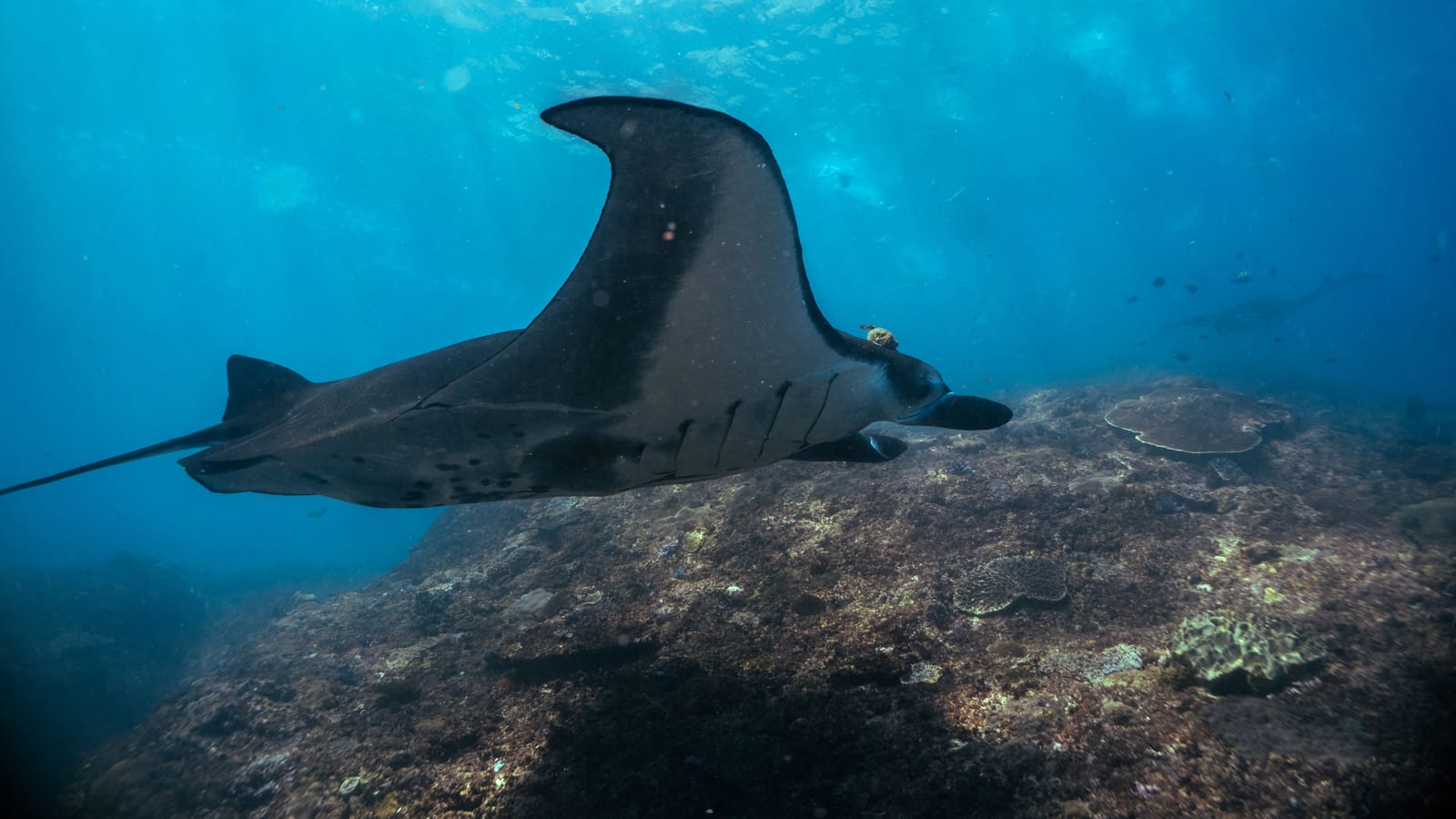
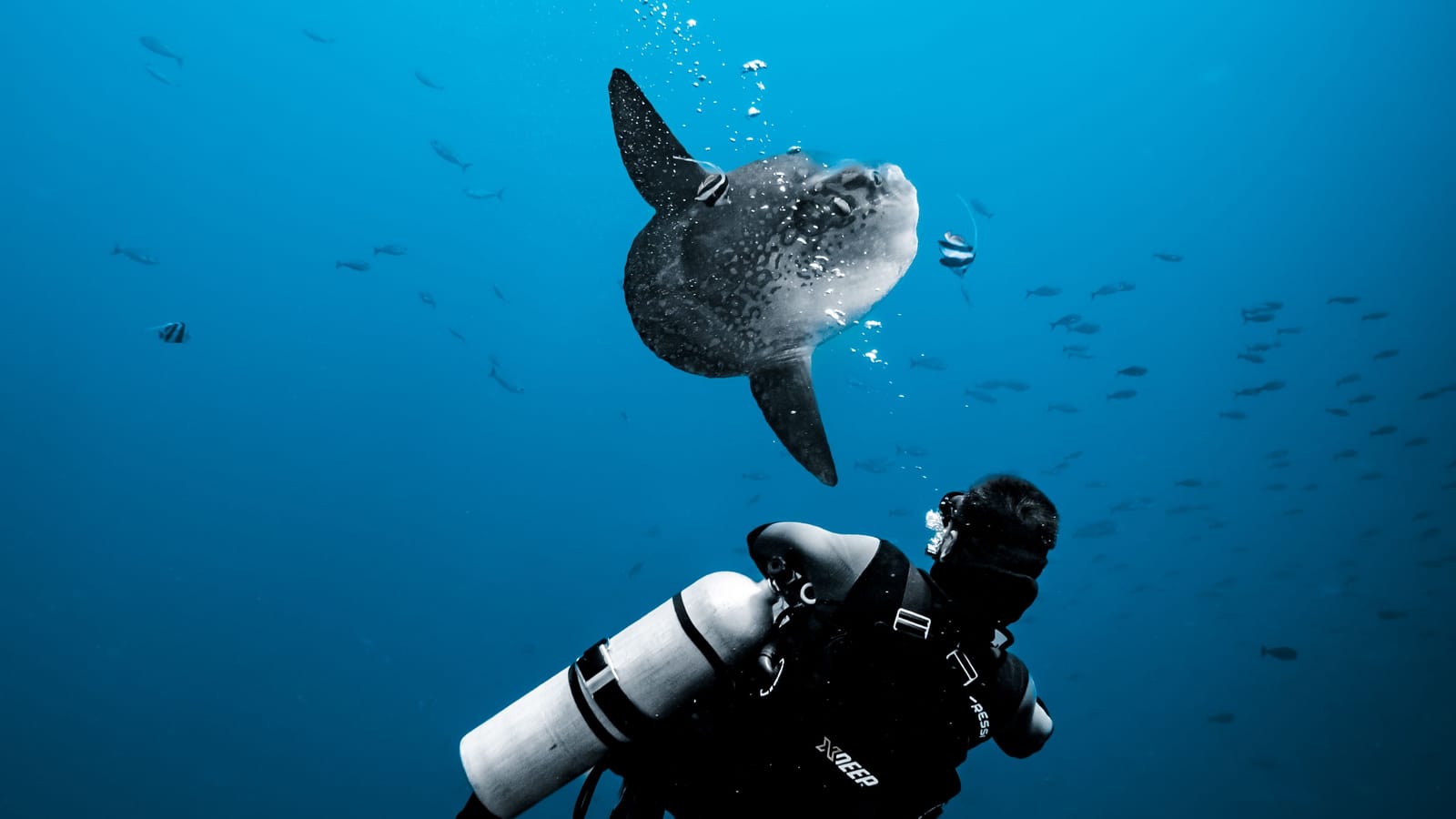
You can see manta rays at two places in Nusa Penida: Manta Point on the south coast and Manta Bay on the west coast, about 12 km apart. Manta Point is the dive site, where adult mantas visit cleaning stations. Manta Bay is the snorkel site, where young mantas feed near the surface. A third option needs no boat: clifftop viewpoints above the south coast.
The animals are reef manta rays and they are present all year. Researchers identified 624 individuals at the two sites between 2012 and 2018.
Where Exactly Are the Manta Sites in Nusa Penida?
| Place | Where | The water | What the mantas do there | Best for |
|---|---|---|---|---|
| Manta Point | South coast, below high cliffs | A sandy bay about 10 to 25 m deep, open to ocean surge | Adults visit cleaning stations. Courtship peaks in April and May | Divers |
| Manta Bay | West coast, about 12 km from Manta Point | A shallow bay, under 20 m | Mostly young males feeding near the surface. Researchers describe it as a likely nursery | Snorkelers and newer divers |
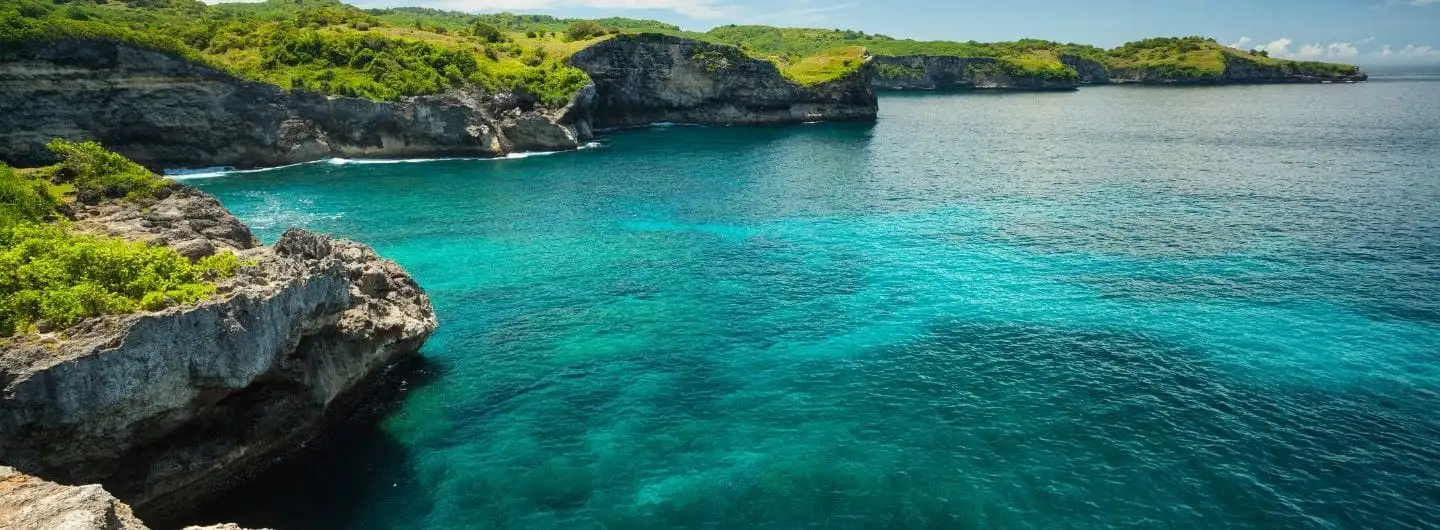
| Clifftop viewpoints | Above the south coast, about 100 m over the sea | You stay on land | Dark shapes moving over pale sand | Non-swimmers, with binoculars |
The two sites share one population. In a study of 5,913 sightings recorded from 2012 to 2018, 44% of the identified mantas appeared at both. They use Manta Bay to feed, and Manta Point to be cleaned and to court.
Encounters at other dive sites around the island are occasional. Manta Point and Manta Bay are where manta rays are expected.
Manta Point or Manta Bay: Which Should You Choose?
Choose by how you want to be in the water.
- You are a certified diver: Manta Point. You watch adult mantas circle the cleaning stations from the sand below them. Expect surge and cooler water, 18 to 25°C. Manta Point counts as a remote site, and we add IDR 150,000 per person for it.
- You do not dive: Manta Bay by snorkel. The mantas feed near the surface of a shallow bay, so a mask and fins are enough. Our trip visits three sites in three to four hours. Our page on snorkeling with manta rays in Nusa Penida has the trip details.
- You want to stay dry: the clifftop. Viewpoints on the south coast look straight down on the water. The last stretch of road is narrow and steep, and no sighting is guaranteed.
Access to Manta Point depends on the swell on the south coast. When the surge is too strong, the boat goes to another site, and Manta Bay is the other place to look.
Both sites are busy. In the 2012 to 2018 study, the average number of boats recorded at Manta Point rose from about 5 in 2012 to about 13 in 2017. Ask how many people will share your guide. We keep dive groups to four guests per guide.
When Can You See Manta Rays in Nusa Penida?
All year. The mantas are residents. In the 2012 to 2018 study, 82% of the identified individuals were seen more than once, and the average was more than nine repeat sightings each.
Two seasonal patterns show up in that data:
- At Manta Point, sightings roughly doubled in May, when courtship peaks.
- At Manta Bay, sightings were only slightly higher from February to April and in July.
The population also appears to be growing. A 2025 study estimated about 170 reef manta rays around Nusa Penida in 2012 and about 447 in 2022.
No one can promise a sighting on a given day. What changes most through the year is the sea. The dry season, from April to October, brings water as cold as 16°C. The rainy season, from November to March, brings water of 26 to 28°C. Trips to the manta sites leave in the morning.
How Do You Get to the Manta Sites?
| Starting point | Route | Time |
|---|---|---|
| Nusa Penida, north coast | Dive or snorkel boat from our dive centre, Legend Diving Penida, at Ped | Up to about 30 minutes to Manta Point |
| Nusa Lembongan | Dive boat | About 45 minutes to Manta Point |
| Bali | Fast boat from Sanur to Nusa Penida, then the dive or snorkel boat | About 45 minutes for the crossing. A dive day trip meets at Sanur harbour at 6:00 am and is back at 6:00 pm |
| By road on Nusa Penida | Scooter or driver to a south-coast viewpoint | Depends on where you stay. The final stretch is narrow and steep |
A fun dive with us costs IDR 945,000, plus the IDR 150,000 surcharge for Manta Point.
What Are the Rules Around Manta Rays?
Divers keep at least 3 m from a manta ray. Snorkelers keep 10 m at all times. Do not touch or chase a manta, do not swim above or below it, and never block its way out.
These rules matter more as boat numbers grow. The researchers who studied the two sites recommended limits on boats and mandatory codes of conduct. The full code of conduct, and the biology behind it, is on our page about the manta rays of Nusa Penida.
Frequently Asked Questions
Is Manta Point the same place as Manta Bay?
No. They are two sites about 12 km apart. Manta Point, on the south coast, is where adult mantas come to be cleaned. Manta Bay, on the west coast, is where younger mantas feed. Dive trips usually go to Manta Point and snorkel trips to Manta Bay.
Can you see manta rays in Nusa Penida without scuba diving?
Yes. Snorkelers see them at Manta Bay, where they feed near the surface. From the clifftop viewpoints on the south coast you can sometimes watch them from land.
Are manta ray sightings guaranteed in Nusa Penida?
No. The mantas are wild residents, which makes sightings frequent and never certain. Sea conditions can also stop a boat from reaching Manta Point.
What is the best month to see manta rays in Nusa Penida?
They are present in every month. In the 2012 to 2018 study, sightings at Manta Point roughly doubled in May, during the courtship peak.
How many manta rays live around Nusa Penida?
Researchers identified 624 different reef manta rays between 2012 and 2018. A 2025 study estimated that about 447 were present in 2022, up from about 170 in 2012.
Can beginners see manta rays in Nusa Penida?
Yes. Snorkeling needs no certificate. We also run a Discover Scuba Diving experience with manta rays for people who have never dived.
Conclusion
Manta rays in Nusa Penida are seen at Manta Point by divers, at Manta Bay by snorkelers and from the south-coast cliffs by anyone. They are there all year, and the same few hundred animals move between the two sites.
Pick the place that fits how you want to be in the water, go in the morning, and keep your distance once you are there.