 简体中文
 Français
 Español
 Deutsch

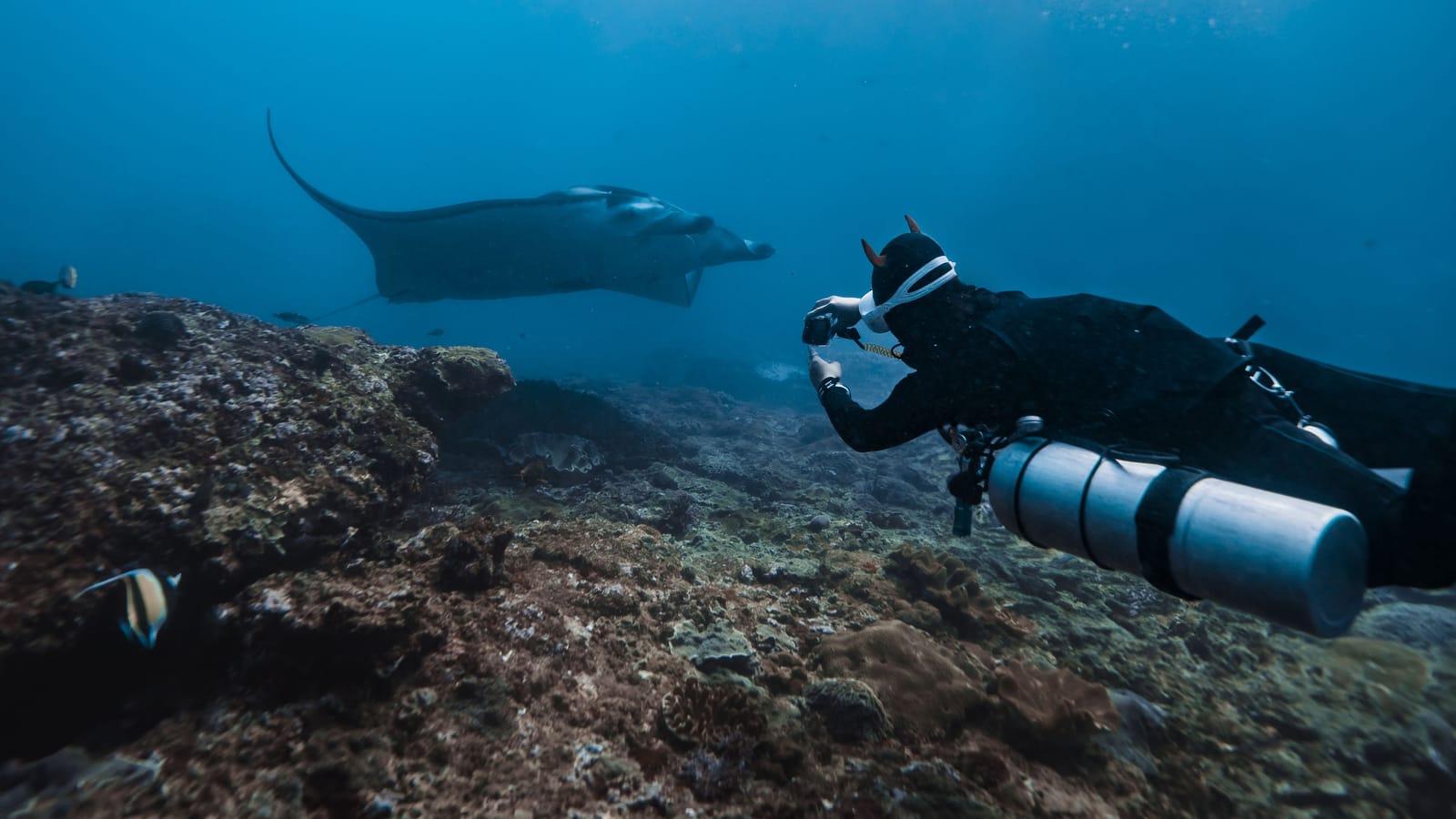
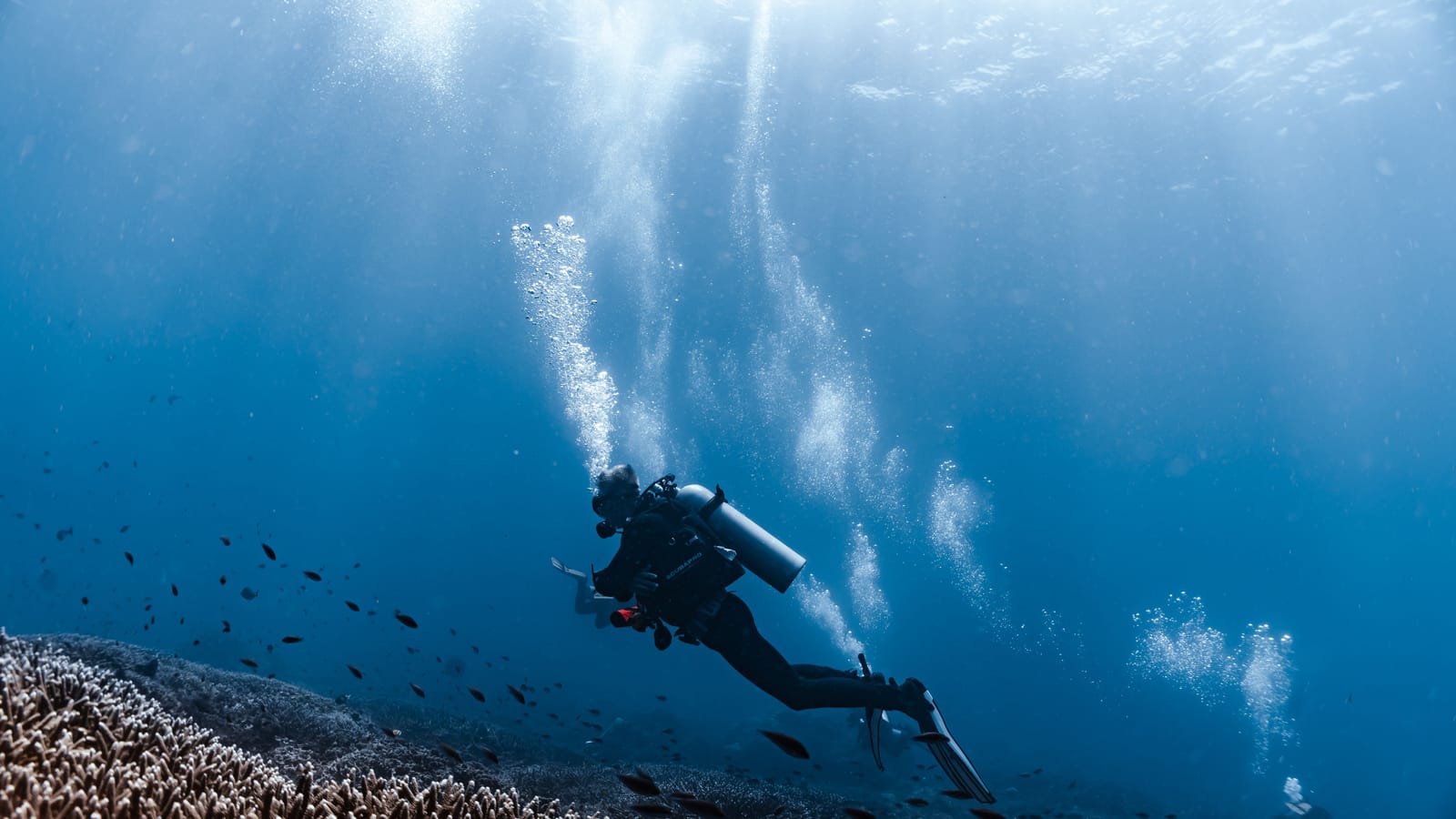
The best places to scuba dive in Bali are Nusa Penida, Tulamben, Amed, Padang Bai and Menjangan. No single region is best for everyone. Nusa Penida is the place for manta rays, mola mola and drift diving. Tulamben has the USAT Liberty wreck, a short swim from the beach. Amed offers shore dives over black sand. Padang Bai has a sheltered bay for first dives. Menjangan has wall dives and some of the clearest water in Bali.
This guide compares the five regions by conditions, season and difficulty. We are Legend Diving Penida, and our team goes scuba diving in Nusa Penida every day. The other four regions are described from published sources: PADI's regional dive guides and Wikipedia's entries on the sites.
How Do Bali's Dive Regions Compare?
| Region | Best for | Conditions | Level | From south Bali |
|---|---|---|---|---|
| Nusa Penida and Nusa Lembongan | Manta rays all year, mola mola in season, drift dives | Strong currents. Water from 16°C in the dry season to 28°C in the rainy season. Visibility often over 30 m | Mixed. Sheltered bays for beginners, current-swept sites for advanced divers | Fast boat from Sanur, 45 to 50 minutes |
| Tulamben | The USAT Liberty wreck, small marine life on black sand | Shore entry over stones. Visibility 12 to 25 m | All levels | About 2.5 hours by road |
| Amed | Shore dives, coral walls, a small wreck | Mostly shore entry from black sand beaches. Sites between 6 and 22 m | All levels | 2.5 to 3 hours by road |
| Padang Bai and Candidasa | First dives in Blue Lagoon. Sharks and current at the offshore islets | Bay: mild to moderate current. Islets: strong, changeable current. Visibility 15 to 20 m | Bay: beginners. Islets: experienced divers | 1 hour to 1 hour 20 minutes by road |
| Menjangan and Pemuteran | Wall dives and clear water | Gentle current. Visibility 15 to 30 m, over 50 m in October and November | Open Water divers and above | About 3 hours by road, then 30 minutes by boat |
Road times are from the airport or south Bali, as PADI's guides give them.
What Is Diving Like in Nusa Penida and Nusa Lembongan?
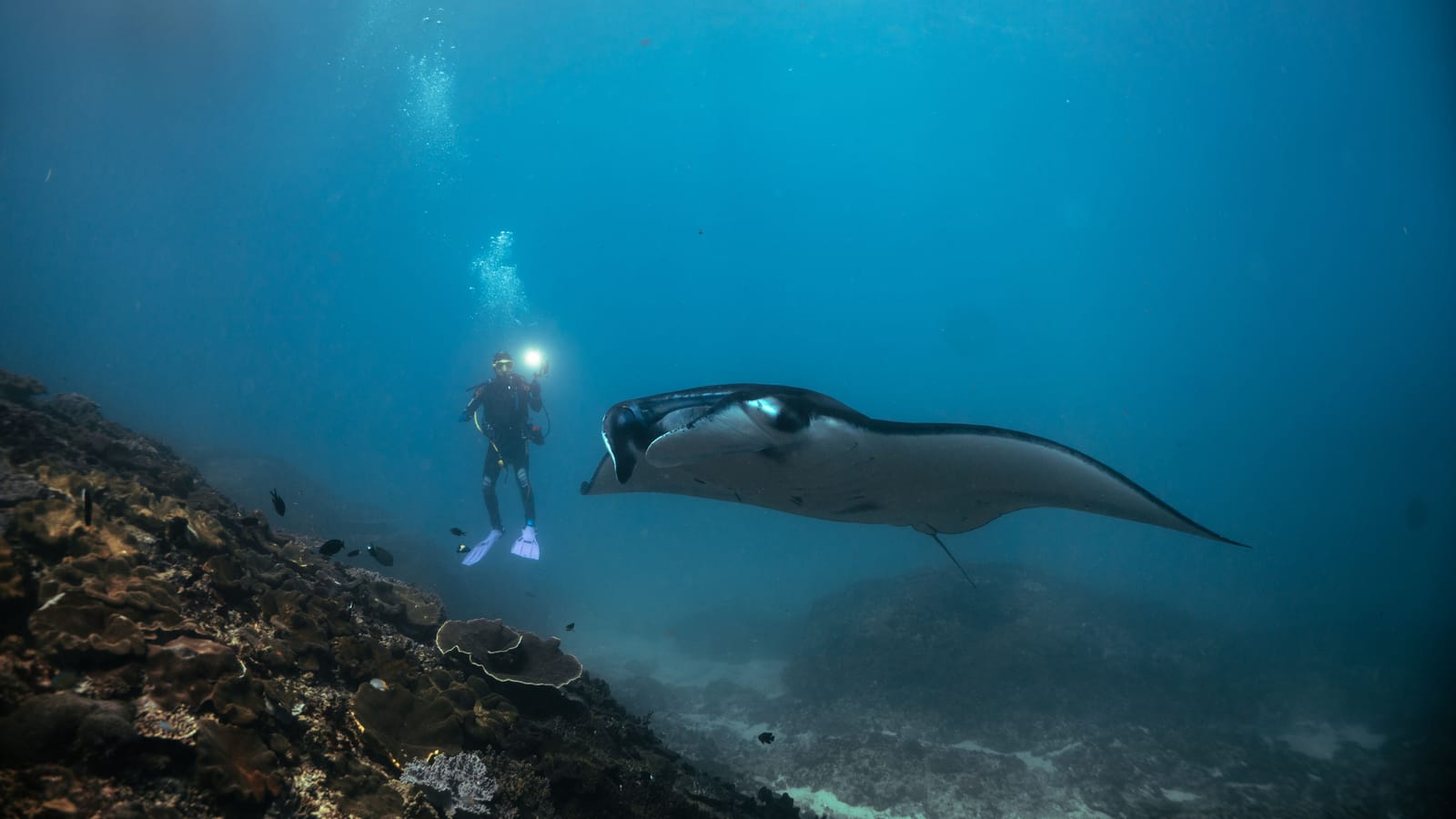
Nusa Penida is the region for large animals. PADI describes it as the only part of Bali where manta rays are regularly seen all year. Mola mola come up to the cleaning stations in the main season, from mid-July to mid-October.
The price is current and cold. The islands sit in the deep channel between Bali and Lombok, and the current can pass 4 knots. In the dry season the water can drop to 16°C.
- Best for: manta rays, mola mola, drift diving and reefs inside a Marine Protected Area.
- Level: all levels, with the site chosen to match. Beginners use sheltered bays. Sites such as Blue Corner are kept for advanced divers.
- Getting there: a fast boat from Sanur, 45 to 50 minutes. A day trip from Bali is possible.
The sites are described one by one, from the shallow bay at Crystal Bay to Blue Corner, on our page for the dive sites around Nusa Penida.
What Is Diving Like in Tulamben and Amed?
Tulamben and Amed lie 12 km apart on Bali's north-east coast, near Mount Agung. Both are shore-diving areas with black volcanic sand.
Tulamben is known for one dive above all: the wreck of the USAT Liberty. The 125 m cargo ship was torpedoed in January 1942 and beached here. Tremors from the 1963 eruption of Mount Agung slid it off the beach. It now lies a short swim from the shore, with its highest point about 5 m below the surface and its deepest about 30 m down. That range puts part of the wreck within reach of every certification level. In high season, up to 100 divers a day visit it.
- Conditions: entry over smooth stones, with visibility of 12 to 25 m. Rain can reduce visibility and change the current.
- Also here: hundreds of small species on the black sand, which is why photographers come.
- Getting there: about 2.5 hours by road from south Bali.
Amed is a 14 km stretch of coast that takes in several villages. Most sites are reached from the shore, and boat dives use local jukung boats.
- Jemeluk Bay: a coral wall between 12 and 22 m, and artificial reef pyramids from 15 m.
- Banyuning: a small Japanese shipwreck between 6 and 12 m.
- Wetsuit: PADI's guide suggests 3 mm in the warm months and 5 to 7 mm when the water cools.
- Getting there: 2.5 to 3 hours by road from the airport.
PADI also lists Seraya for muck diving.
What Is Diving Like in Padang Bai and Candidasa?
Padang Bai is the closest of these regions to south Bali by road, 1 hour to 1 hour 20 minutes away. It offers two very different kinds of dive.
- The bay. Blue Lagoon is a sheltered reef with mild to moderate current. The sites in and around it run from 5 to 9 m at the shallow end to a wall that drops to 30 m. PADI notes that the bay is sometimes used for Open Water courses. A small ship was sunk on purpose at 18 m at Jepun in 2008.
- The islets. Gili Mimpang, Gili Tepekong and Gili Biaha are three small islands north of Padang Bai. Currents here can run up, down and sideways at the same time, which PADI's guide compares to a washing machine. These sites are for experienced divers. The reward is sharks and, in season, mola mola.
Visibility is 15 to 20 m through the year, according to PADI. Currents are strongest at the change of tide and around the new moon.
The Padang Bai sites can also be dived from Nusa Penida. We list them among our dive sites.
What Is Diving Like in Menjangan and Pemuteran?
Menjangan is a small island about 8 km off the north-west corner of Bali, inside West Bali National Park. It is the region for wall diving and visibility.
- Walls: from 5 m down to 40 m.
- Current: gentle. PADI's guide calls a current of more than one knot unusual.
- Visibility: 15 to 30 m on a typical day, and more than 50 m in October and November.
- Wreck: the Anker Wreck, an old wooden vessel at about 40 m, for experienced divers.
- Getting there: by boat only, about 30 minutes from Pemuteran. Pemuteran is about 3 hours by road from the airport.
The easy conditions come with one caution. The walls go deep, so watch your depth, ascend slowly and make your safety stops.
Pemuteran, on the mainland, is the base for Menjangan. Its bay holds a coral restoration project that began in 2000, with reef structures in 3 to 7 m of water. In 2001 its founders described it as the largest project of its kind in the world.
When Is the Best Time to Dive Each Region of Bali?
You can dive Bali all year. The dry season runs from April to October and the rainy season from November to March. PADI gives May to November as the best window for the island as a whole.
| Region | Best months | What changes through the year |
|---|---|---|
| Nusa Penida and Nusa Lembongan | All year for manta rays. Mid-July to mid-October for mola mola | The water is coldest in the mola season. The first rains, in December and January, make visibility change from day to day |
| Tulamben | All year | In the rainy season, rain can reduce visibility and change the current |
| Amed | April to June and September to December | Diving continues all year. Cooler water calls for a thicker wetsuit |
| Padang Bai and Candidasa | All year. Mola mola in season at the islets | Currents strengthen at the change of tide and around the new moon |
| Menjangan and Pemuteran | April to November | Visibility peaks in October and November |
- For mola mola, come between mid-July and mid-October and dive Nusa Penida, with a thick wetsuit.
- For the clearest water, dive Menjangan in October or November.
- In the rainy season, every region stays open. Expect warmer water and less predictable visibility.
Which Bali Dive Region Suits Your Level?
| You are | Go to | Why |
|---|---|---|
| A first-time diver | Padang Bai, Tulamben or Amed | Sheltered or shore-entry sites with shallow water. PADI describes Tulamben as a good place to learn |
| A first-time diver who wants manta rays | Nusa Penida | Possible on a Discover Scuba Diving experience, beside an instructor, when the sea allows |
| A new Open Water diver | Tulamben, Amed, Menjangan, or the easier sites of Nusa Penida | The Liberty wreck starts at 5 m. Menjangan's current is gentle |
| An advanced diver who likes current | Nusa Penida, or the islets off Padang Bai | Drift dives, sharks and schooling fish |
| An underwater photographer | Tulamben and Amed for small subjects. Menjangan for clear water | Black sand sets off small marine life. Menjangan has the visibility |
| A wreck diver | Tulamben | The USAT Liberty, from 5 to 30 m. Amed and Padang Bai each have a small wreck |
The level of a region is the level of its easiest site. Every region in this guide also has dives that need more experience, so tell your dive centre what you have done before.
Frequently Asked Questions
Which part of Bali is best for beginner divers?
Padang Bai, Tulamben and Amed. Blue Lagoon at Padang Bai is a sheltered bay that is sometimes used for Open Water courses. Tulamben and Amed have shallow sites that you enter from the shore.
Where can you dive with manta rays in Bali?
At Nusa Penida. PADI describes it as the only region of Bali where manta rays are regularly seen all year. The two sites are Manta Point and Manta Bay.
What is the best wreck dive in Bali?
The USAT Liberty at Tulamben. The 125 m ship lies a short swim from the beach, between about 5 and 30 m deep, so every certification level can dive part of it.
When is the best time of year to dive in Bali?
Bali is diveable all year. PADI gives May to November as the best window. The mola mola season at Nusa Penida runs from mid-July to mid-October, and Menjangan is clearest in October and November.
Which Bali dive region has the best visibility?
Menjangan. PADI gives 15 to 30 m as typical, and more than 50 m in October and November. Nusa Penida often exceeds 30 m.
Can you dive more than one region of Bali in one trip?
Yes. Tulamben and Amed are 12 km apart. Padang Bai is about an hour from south Bali, and Nusa Penida is a fast-boat ride from Sanur. Menjangan is about three hours from the airport, so plan it as its own stop.
Conclusion
Bali's best diving is spread over five regions, and each one answers a different wish. Choose Nusa Penida for manta rays, mola mola and current. Choose Tulamben for the Liberty wreck, Amed for shore dives over black sand, Padang Bai for a first dive close to the south, and Menjangan for walls and clear water.
Match the region to your level and your month, and leave time for more than one.