 简体中文
 Français
 Español
 Deutsch

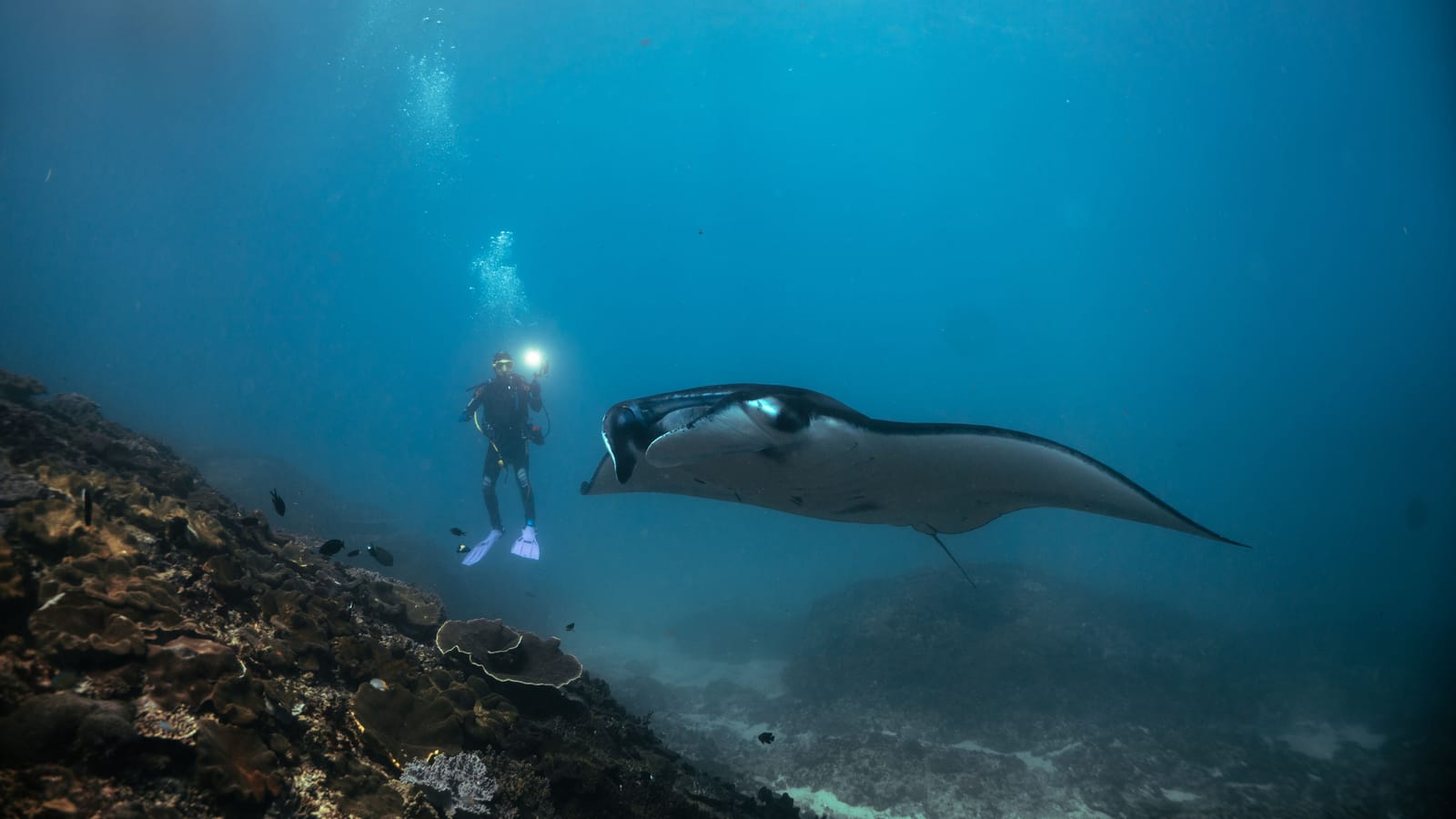
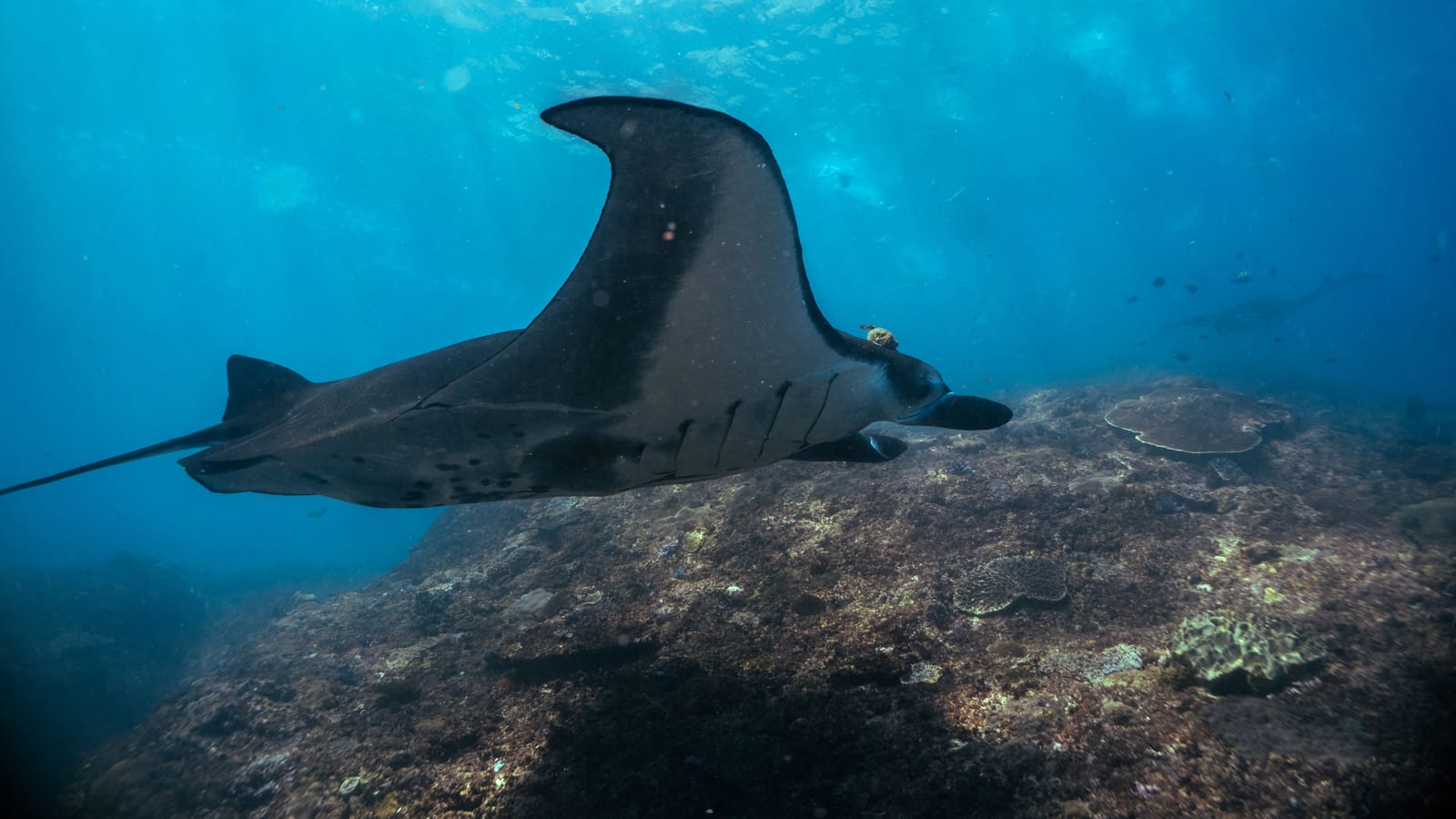
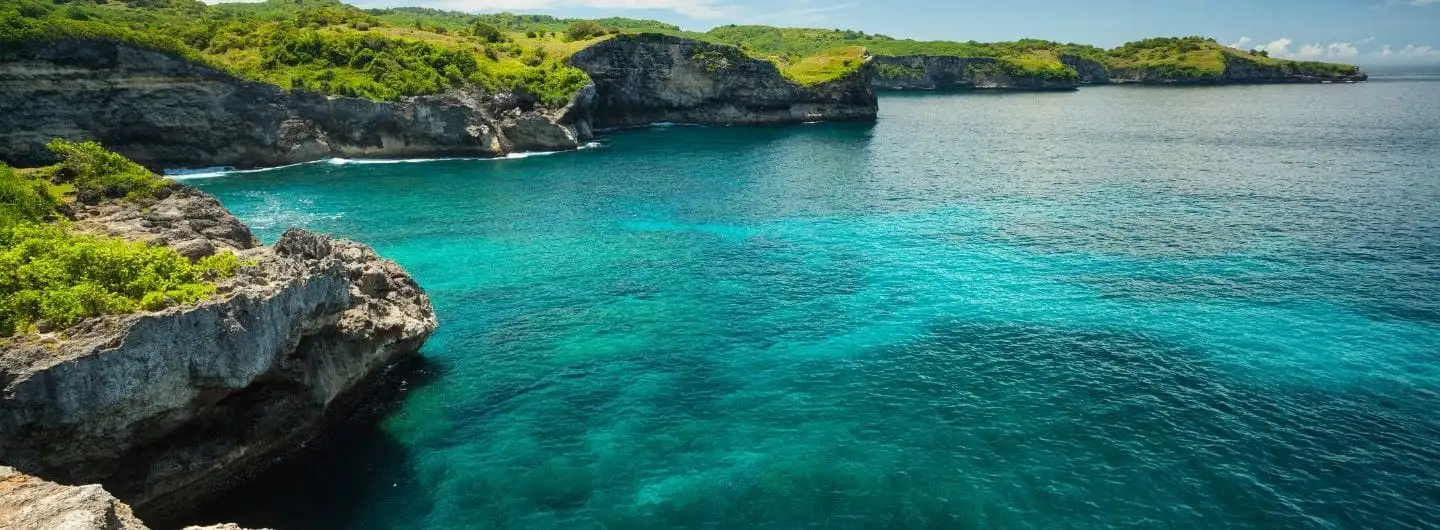
Manta Point is a dive site on the south coast of Nusa Penida where reef manta rays come to be cleaned. It is a sandy bay under steep cliffs, about 10 to 25 m deep, with three main cleaning stations. You reach it by boat, and the current is usually light. What decides the dive is the ocean swell, which is why the site is open on some days and closed on others.
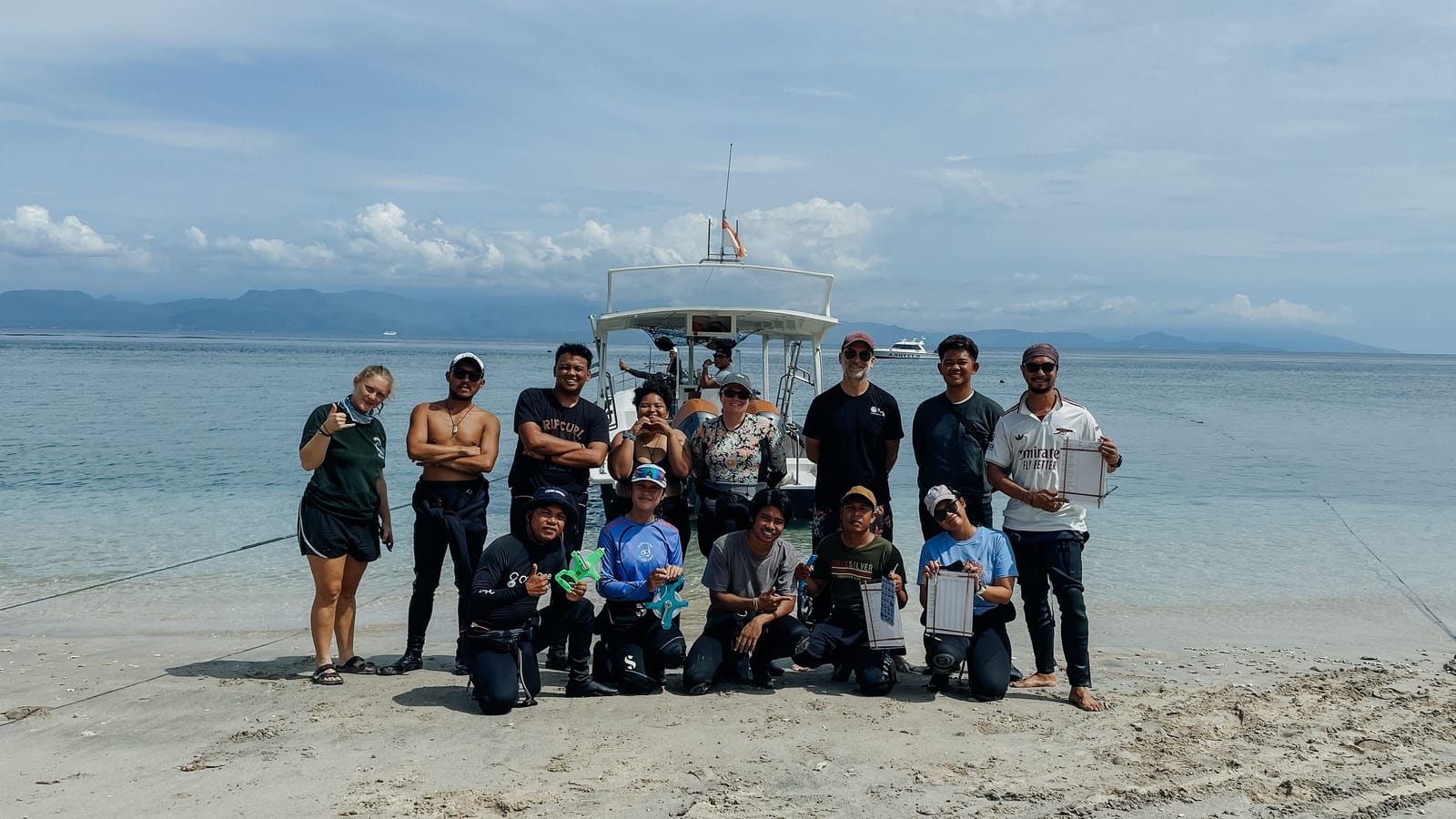
At Legend Diving Penida, we reach Manta Point in about 30 minutes from the island's north coast. It is the farthest of our dive sites.
What Are the Key Facts About Manta Point?
| Item | Detail |
|---|---|
| Location | South coast of Nusa Penida, under steep cliffs |
| Access | By boat only, about 30 minutes from our dive centre at Ped |
| Seabed | Sand, with soft coral and rock |
| Depth | 10 to 25 m |
| Cleaning stations | Three main stations |
| Current | None to medium |
| Surge | Often present, sometimes strong |
| Water temperature | 18 to 25°C, 23°C on average |
| Visibility | Good to low |
| Level | Beginner to expert, always with a guide |
| Entry | Back roll from the boat |
| Price | IDR 945,000 per fun dive, plus a remote-site fee of IDR 150,000 per person |
The depth, current, temperature and visibility figures are from our site card for Manta Point. The prices are from our price list.
What Is the Depth Profile at Manta Point?
The whole dive takes place in one bay. The floor is sand, with patches of rock and soft coral. Our site card gives the bay as 10 to 25 m deep. A 2019 study of Nusa Penida's manta rays describes it as 7 to 25 m deep, bordered by steep rocky cliffs and deep water.
- Cleaning stations. We count three main stations, spread around the site. Each is a patch of reef where small fish pick parasites off the mantas. Site guides published by dive centres on the island place them in the shallower part of the bay, at roughly 5 to 12 m.
- Sand floor. Dozens of stingrays rest on the sandy floor.
- Maximum depth. Just over 25 m.
This makes Manta Point one of the shallower dives around Nusa Penida. Most of the island's other sites reach 40 m or more. Depth is rarely the limit here. Cold water and surge are.
How Strong Are the Current and Swell at Manta Point?
The current is light. Our site card rates it none to medium, and Manta Point is not a drift dive. That sets it apart from the north coast of Nusa Penida, where the dives are drift dives.
Swell is the real variable. The south coast faces the open Indian Ocean, and the waves that reach the cliffs push water in and out of the bay. Underwater you feel this as surge: the water carries you forward, then back, over the same patch of sand.
- In the water. The rule we give for current applies to surge as well: do not fight it. Hold your depth, stay clear of rock and coral, and let the movement pass.
- On the boat. The ride can be rough when the swell is up. Our trip notes say the calmest seas run from November to May.
- On the schedule. Strong surge from the south coast can make the site hard to reach. On those days the boat goes to one of the other Nusa Penida dive sites.
Visibility is rated good to low. The plankton that draws the mantas also clouds the water.
How Do You Enter and Exit the Water at Manta Point?
Manta Point is a boat dive from start to finish. There is no beach and no shore entry under the cliffs.
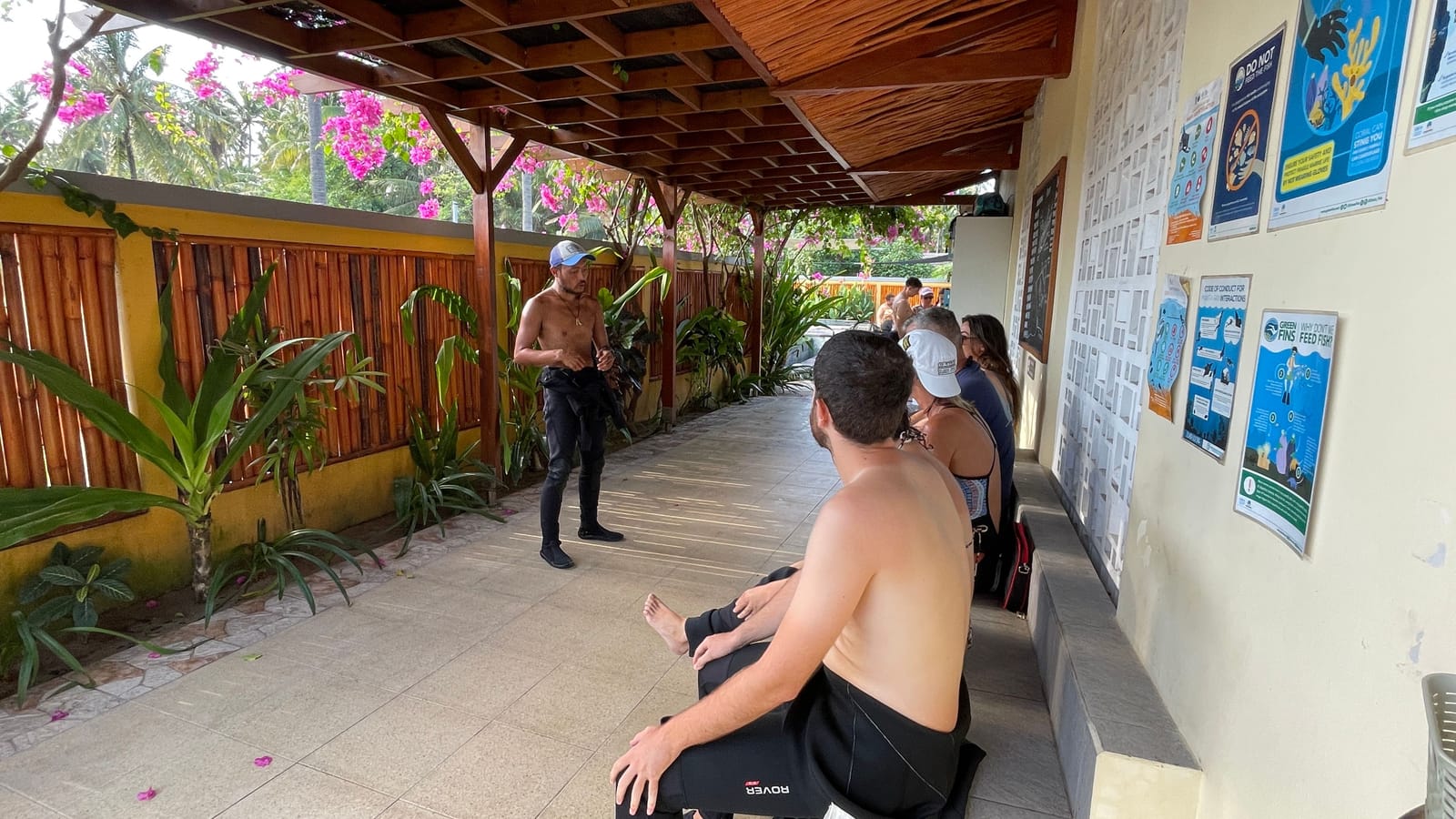
- Briefing on the boat. The guide explains the entry and exit, the conditions on the day and how to behave around the mantas.
- Entry. You gear up on the boat and back roll into the water.
- Descent. The group goes down together into the bay. We keep groups to four guests per guide.
- The dive. You stay behind your guide and watch from the side of a cleaning station.
- Ascent. You make the safety stop at the same level as your guide.
- Exit. You keep your mask on and your regulator in until you are back on board.
On our sample day, the boat leaves at 9:00 am and reaches Manta Point at 9:30 am. The first dive is finished by 10:45 am. The second dive is usually at Crystal Bay, about 20 minutes away.
How Should You Behave at the Cleaning Stations?
A cleaning station is a fixed place. The cleaner fish live on that patch of reef, and the mantas come to them. In a study of sightings recorded from 2012 to 2018, cleaning was the main behaviour at Manta Point, in 59% of sightings.
This is why your position matters. If a station is damaged, the cleaner fish may leave, and the mantas with them.
- Stay at the side of the station. Never swim onto it or over it.
- Stay low. Hover close to the seabed without touching it.
- Keep 3 m away. Stay behind your guide and go no closer than they do.
- Leave the way in and out open. Do not block a manta's path, and do not follow one that leaves.
- Breathe gently when a manta passes overhead. A burst of bubbles disturbs it.
- Touch nothing. In surge, hold your position with buoyancy and fins, never with a hand on the reef.
The first two points follow the Manta Trust's code of conduct for divers. The others follow the code that we drew up with the Marine Megafauna Foundation. The full code, and the biology of the species, are on our page about reef manta rays in Nusa Penida.
What Are the Odds of Seeing Manta Rays at Manta Point, Month by Month?
Manta rays are seen at Manta Point in every month of the year. We see them there consistently, on a daily basis. No published study gives a percentage per dive, so this article does not quote one.
The table is a guide, not a forecast. The conditions column comes from our season notes. The last column comes from a study of manta sightings recorded between 2012 and 2018.
| Month | Sea and water | Mantas and boats in the 2012 to 2018 study |
|---|---|---|
| January | Peak of the rainy season. Calmest part of the year, with occasional storm days | No seasonal peak. Fewer boats |
| February | Peak of the rainy season. Calmest part of the year | No seasonal peak. Fewer boats |
| March | Last month of the rainy season. Calmest part of the year | No seasonal peak. Fewer boats |
| April | Dry season begins. Calmest part of the year | Courtship starts to peak. More boats |
| May | Dry season. Last month of the calmest seas | Sightings about double. Courtship peaks. Most boats |
| June | Dry season. Water can drop to 18 to 20°C | No seasonal peak. More boats |
| July | Dry season. Water can drop to 18 to 20°C | No seasonal peak. More boats |
| August | Dry season. Water can drop to 18 to 20°C | No seasonal peak. More boats |
| September | Dry season. Water can drop to 18 to 20°C | No seasonal peak. Second peak in boats |
| October | Last month of the dry season. Water can drop to 18 to 20°C | No seasonal peak. More boats |
| November | Rainy season begins. Calmest seas return | No seasonal peak. Fewer boats |
| December | First rains. Visibility changes from day to day. Occasional storm days | No seasonal peak. Fewer boats |
Three things stand out.
- May is the strongest month in the data. Sightings at Manta Point roughly doubled, during the courtship peak of April and May.
- November to March is warmer and quieter. You trade some rain and changing visibility for fewer boats.
- June to October is cold and busy. The water is at its coldest, and boat numbers stay high.
The same study notes that weather in the north-west monsoon, in December and January, limited access to the site. In any month, the sea on the day decides whether the boat goes.
What Skill Level Do You Need for Manta Point?
Our site card rates Manta Point from beginner to expert. No advanced certification is needed, because the cleaning stations are shallow and the current is light.
| You are | Can you dive Manta Point? |
|---|---|
| A non-diver | Yes, when the sea allows, on a Discover Scuba Diving experience. You dive beside an instructor to a maximum of 12 m, in a group of two |
| An Open Water Diver | Yes, with a guide, within your 18 m limit |
| An Advanced Open Water Diver | Yes. The whole bay is within your 30 m limit |
| Certified, with no dive in the past year | After a pool refresher, unless you have more than 30 logged dives |
Three things make the dive easier.
- Buoyancy control. You hover low over sand in moving water, without touching the bottom.
- Warmth. We recommend a 5 mm wetsuit at a minimum in the dry season.
- A spare day. If Manta Point is the reason for your trip, leave room in your plan, because swell can close the site.
Frequently Asked Questions
Is Manta Point a drift dive?
No. The current is rated none to medium, and the dive stays in one bay. The movement you feel is surge from the swell.
How cold is the water at Manta Point?
Between 18 and 25°C, with an average of 23°C. From June to October it can drop to 18 to 20°C. We recommend a 5 mm wetsuit at a minimum in the dry season.
How long is the boat ride to Manta Point?
About 30 minutes from our dive centre, on the north coast at Ped. Manta Point counts as a distant site, so a remote-site fee of IDR 150,000 per person applies.
Can you snorkel at Manta Point?
Our snorkeling routes use Manta Bay for manta rays. Manta Point is deeper and more exposed to swell, and it is mainly a dive site.
Do you need an Advanced Open Water certification for Manta Point?
No. Open Water divers dive it with a guide. We also take first-time divers there on a Discover Scuba Diving experience.
What else can you see at Manta Point?
Stingrays. Dozens of them rest on the sandy floor. They are a different animal from the manta ray, which has no stinger on its tail.
Conclusion
Manta Point is a shallow, sandy bay on the south coast of Nusa Penida, where three main cleaning stations bring reef manta rays in all year. The current is light and the depth is modest. The swell is what makes the site demanding, and what sometimes closes it.
Go in the morning, dress for cool water, stay low at the side of the station, and let the mantas come to you.