 简体中文
 Français
 Español
 Deutsch

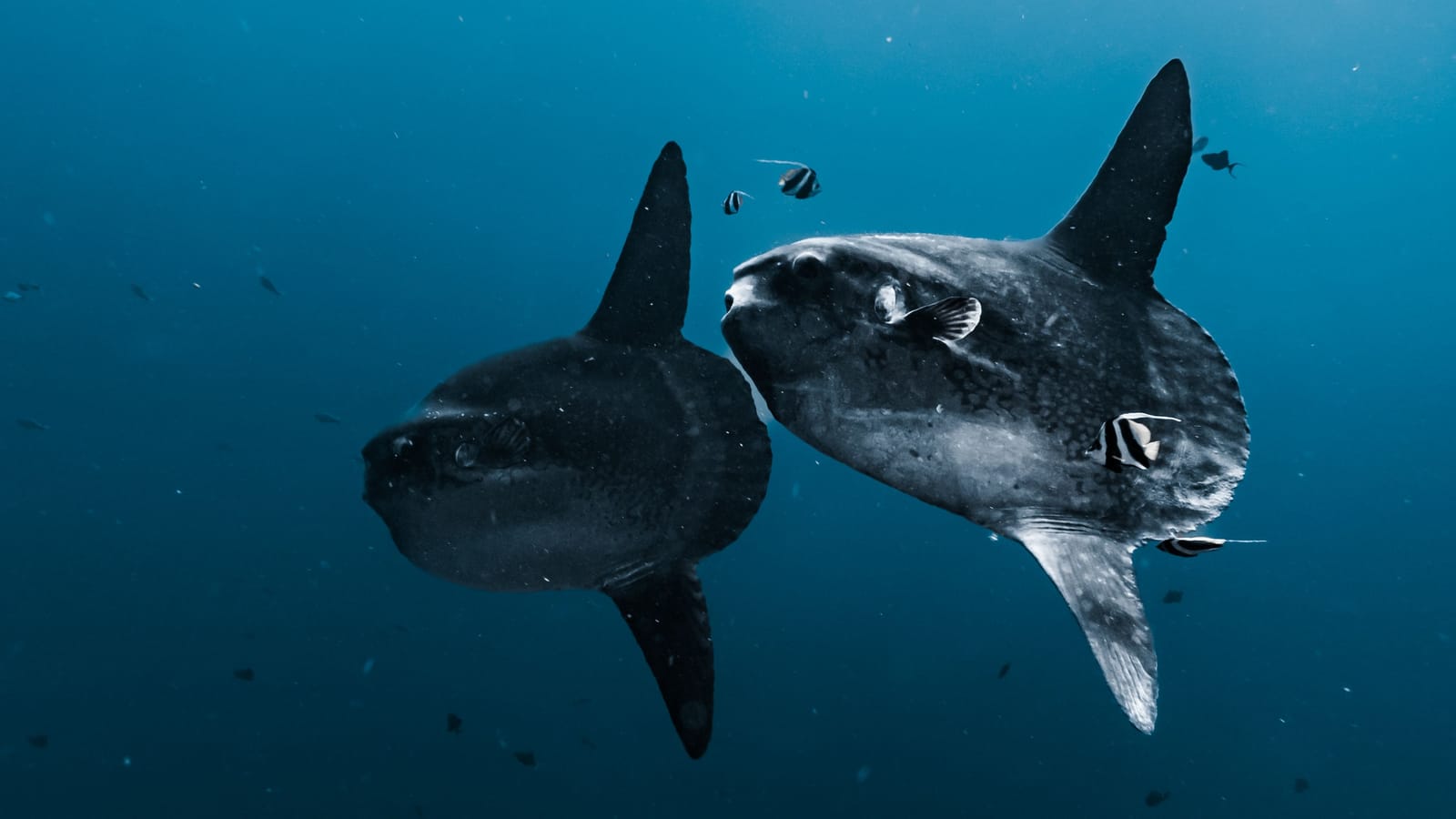
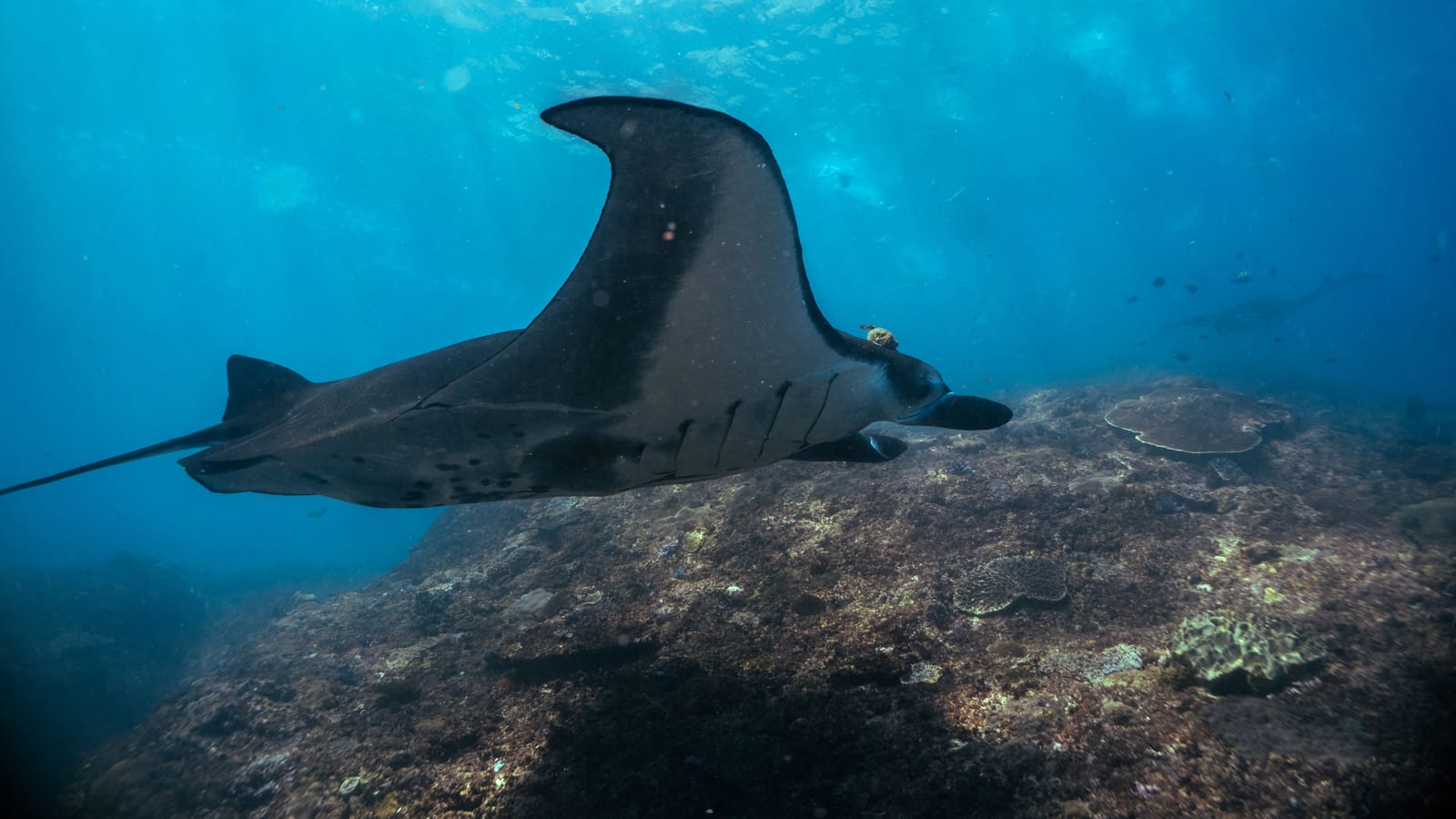
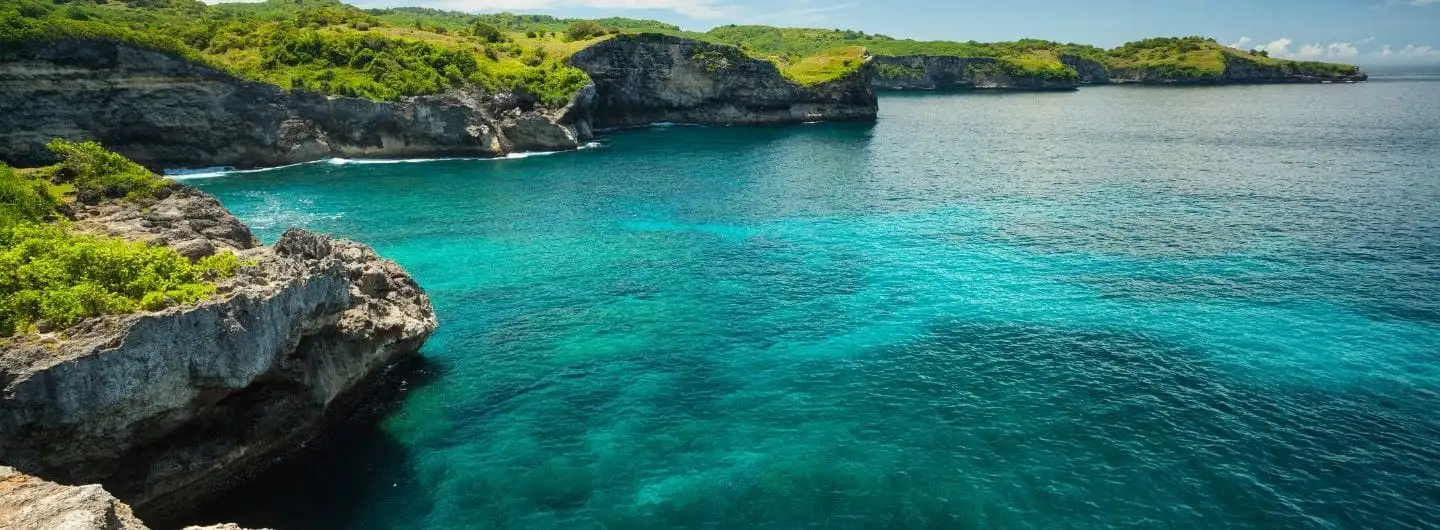
Crystal Bay is a dive site on the west coast of Nusa Penida, and the site we at Legend Diving Penida name first for mola mola. It is two sites in one. A shallow, sheltered bay of 5 to 8 m suits first dives and training. Outside the bay, a reef plateau falls away into a drop-off of more than 60 m, where cold water, strong current and mola cleaning stations meet.
That split explains the site. The bay is for beginners, and the drop-off is for experienced divers. The name is sometimes written Cristal Bay.
What Are the Key Facts About Crystal Bay?
| Item | Detail |
|---|---|
| Location | West coast of Nusa Penida, at the edge of the channel towards Nusa Ceningan |
| Shallow bay | 5 to 8 m, sheltered |
| Reef | Plateau and drop-off, from 12 m to more than 60 m |
| Known for | Mola mola cleaning stations along the drop-off |
| Mola season | Mid-July to mid-October |
| Water temperature | 16 to 28°C, 22°C on average |
| Visibility | Excellent to good |
| Current | None to very strong. Down currents are possible on the drop-off |
| Level | Bay: beginners. Drop-off: Advanced Open Water recommended |
| Access | By boat. Our sites are 10 to 30 minutes from our dive centre |
The reef depth, temperature, visibility and current are from our site card for Crystal Bay. The bay depth is from our dive sites page.
How Deep Is Crystal Bay, and How Is the Site Laid Out?
Crystal Bay has three parts, and each has its own depth.
| Part of the site | Depth | What is there |
|---|---|---|
| The bay | 5 to 8 m | Sheltered water over sand and coral gardens |
| The reef plateau | From about 12 m | The reef that fringes the bay and leads out to the corners |
| The drop-off | To 60 m and beyond | Cleaning stations, cold water and the strongest current |
- The cleaning stations. There are several stations along the reef drop-off. Most mola encounters happen between 20 and 40 m. A published tagging study photographed a sunfish being cleaned at 25 to 30 m at Nusa Penida.
- The route. Dive centres on the island describe a swim from the bay along the reef to two corners, where the bay meets the channel.
- The bay. It is a dive in its own right: coral gardens, clownfish in their anemones, and small life such as nudibranchs, crabs and shrimps.
The bottom of the drop-off is far below any recreational limit. Open Water divers stop at 18 m and Advanced Open Water divers at 30 m, so depth control matters on this reef.
Why Is the Water at Crystal Bay So Cold?
Crystal Bay has the lowest average temperature of the eight sites on our site cards: 22°C, in a range of 16 to 28°C. Two things explain it.
- Upwelling. From about June to October, the south-east monsoon drives a strong seasonal upwelling south of Bali. Cold water from the deep Indian Ocean rises towards the reefs.
- The thermocline. Warm water sits on top of the cold water without mixing. The boundary between the two is the thermocline. When you cross it, the temperature drops suddenly.
In the cold months the water here falls to 18 to 20°C, and it can reach 16°C. In the rainy season the island's water is 26 to 28°C. The cold is also the reason to come: guides look for mola mola where the cold water begins.
Our advice for cold-water dives applies to this site more than any other.
- Wear enough neoprene. A 5 mm wetsuit is the minimum, 7 mm if you feel the cold, with a hood.
- Expect less insulation at depth. Neoprene compresses as you descend. At about 30 m a wetsuit keeps little of its warmth.
- Watch your air. Cold raises your air consumption.
- End the dive if you shiver. Go shallower or surface, then warm up with a towel and a hot drink.
When Is Mola Season at Crystal Bay?
The main season runs from mid-July to mid-October, and August is the surest month. Early sightings start in June and late ones continue to the end of October. An occasional mola is seen in any month.
The fish come up from deep water to the cleaning stations, where reef fish such as longfin bannerfish and emperor angelfish pick off their parasites. Four things shape a mola dive at this site.
- Depth. Most encounters are between 20 and 40 m, below the Open Water limit of 18 m. We recommend Advanced Open Water and the Deep specialty.
- Tides. A tagging study found that sunfish here are most commonly sighted during the spring tides of July to October. Spring tides fall around full moon and new moon.
- Crowds. High season brings many boats to one bay. Expect company on the reef.
- Distance. Keep at least 3 m from a mola and stay behind your guide. A mola that is left alone at a cleaning station stays longer.
How Strong Is the Current at Crystal Bay, and How Is the Dive Timed?
The current ranges from none to very strong. Your position on the site decides which you get.
- Inside the bay, the water is sheltered.
- On the corners and the drop-off, the current comes from the channel between Nusa Penida and Nusa Ceningan. Currents around these islands can pass 4 knots.
- Down currents can form where a strong current meets a steep drop-off. DIVE Magazine describes dangerous down currents at Crystal Bay at certain times of the tide.
The current is tidal, so the state of the tide matters more than the time of day.
- Slack water is the calm window. Slack water is the pause when the tide turns.
- Spring tides bring the strongest current. They fall around full moon and new moon, the same days on which mola sightings peak. The best mola days are also the most demanding ones.
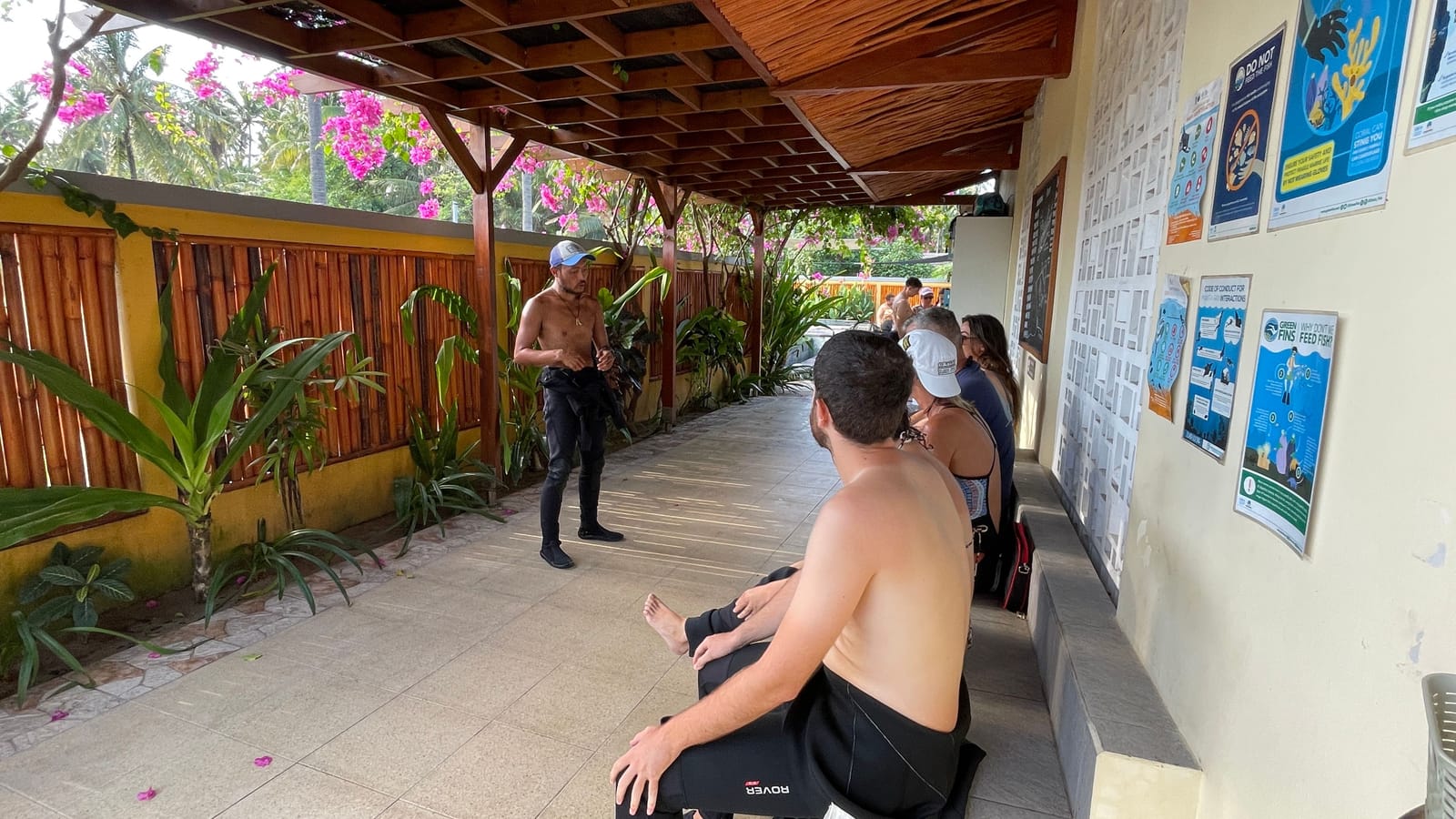
- The guide sets the route on the day. The briefing covers the current, the entry and exit, and what to do if conditions change.
On our sample day, Crystal Bay is the second dive of the day, about 20 minutes by boat from Manta Point.
If you meet a down current, our procedure is this:
- Stay calm. Watch your bubbles to see which way the water is moving.
- Swim horizontally, out of the current. Do not try to swim straight up.
- Add a little air to your BCD to slow the descent. Be ready to release it once you are out.
- Stay close to the reef, where the current is weaker, and close to your guide.
When Is Crystal Bay Unsuitable for Beginners?
Crystal Bay suits beginners inside the bay. Our site card rates the site from beginner to expert, and the two ends of that scale are two different dives.
| You are | Crystal Bay is |
|---|---|
| On a try dive | Suitable in the bay, beside an instructor. The bay is 5 to 8 m deep |
| A snorkeler | Suitable in the bay. Our snorkeling routes stop here |
| A new Open Water Diver | Suitable in the bay and on the shallow reef, on a calm day, with a guide. The cleaning stations are below your 18 m limit |
| An Advanced Open Water Diver new to current | Possible to 30 m with a guide, on a day of weak tide |
| An Advanced or Deep diver used to current | The whole site |
For a beginner, Crystal Bay is the wrong site in four situations.
- The plan leaves the bay. The corners and the drop-off bring current, depth and cold together.
- The tide is running hard. This is most likely around full moon and new moon.
- The water is at its coldest. In mola season the cold raises air consumption.
- You have not dived for a year. We ask for a pool refresher first, unless you have more than 30 logged dives.
On those days your guide will choose a different site. The island's other sites are described one by one on our page for the dive sites of Nusa Penida.
Frequently Asked Questions
Where is Crystal Bay in Nusa Penida?
On the west coast of the island, facing Nusa Ceningan across the channel. Divers reach the reef by boat.
Can you snorkel at Crystal Bay?
Yes. The shallow bay is a regular stop on our snorkeling routes.
Are there down currents at Crystal Bay?
They can occur on the drop-off when the tide runs hard. If you meet one, swim horizontally out of it, stay close to the reef and follow your guide. The bay itself is sheltered.
Do you need Advanced Open Water to dive Crystal Bay?
Not for the bay. For the mola cleaning stations, yes in practice. Most encounters are between 20 and 40 m, and Open Water divers are limited to 18 m.
What can you see at Crystal Bay besides mola mola?
Coral gardens, clownfish in their anemones and many reef fish. Look closer for nudibranchs, crabs and shrimps.
Is it Crystal Bay or Cristal Bay?
Crystal Bay is the usual spelling, and the name comes from the clear water. Cristal Bay is a variant that appears on some pages. Both names mean the same site.
Conclusion
Crystal Bay is a sheltered bay for first dives and a deep, cold, current-swept drop-off for experienced divers, in one place. Its cleaning stations make it the main mola site of Nusa Penida from mid-July to mid-October.
Dive the bay if you are new. Dive the drop-off if you are certified to 30 m, dressed for cold water and comfortable in current. In both cases, let the tide and your guide decide the plan.