 简体中文
 Français
 Español
 Deutsch

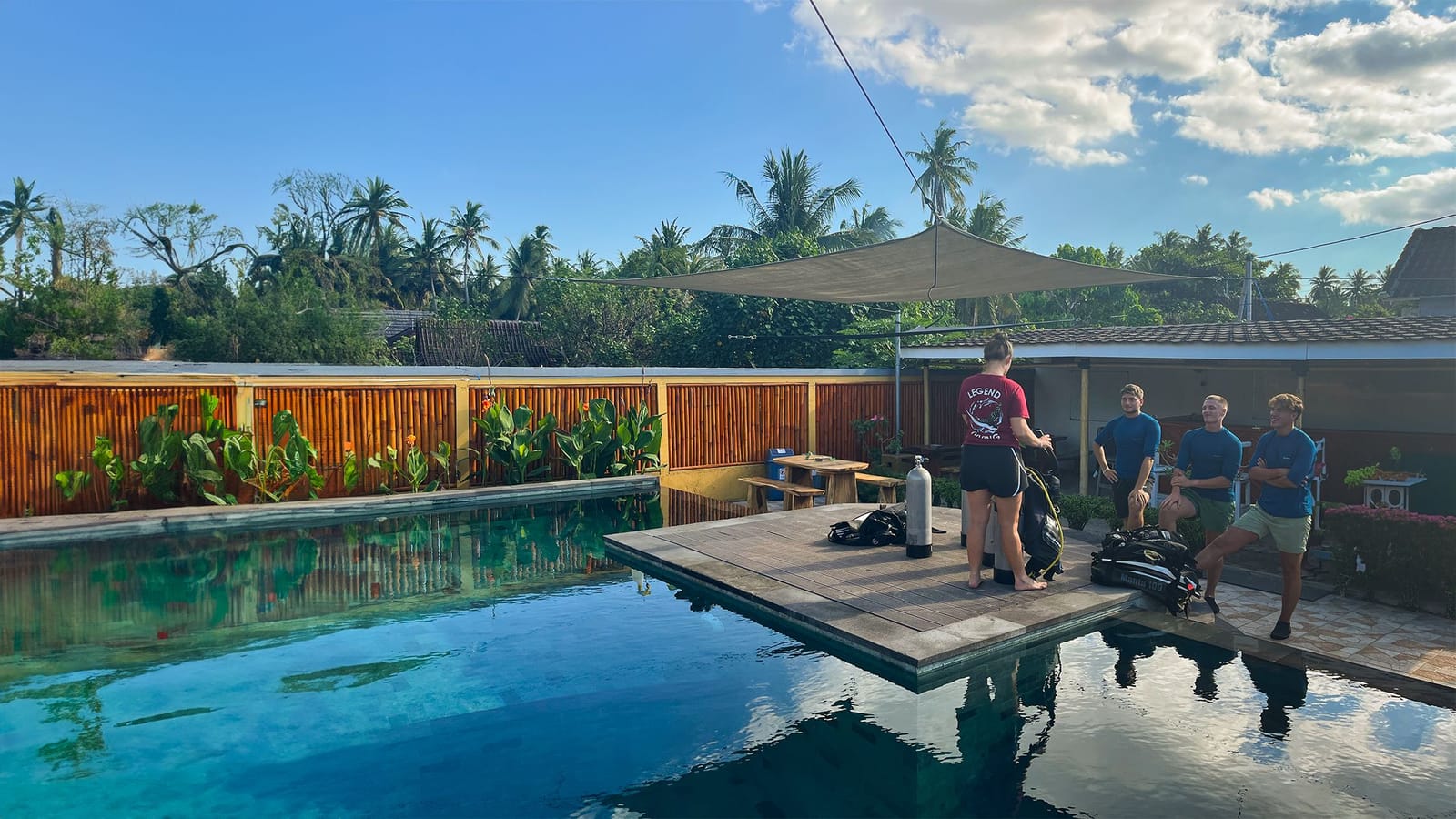
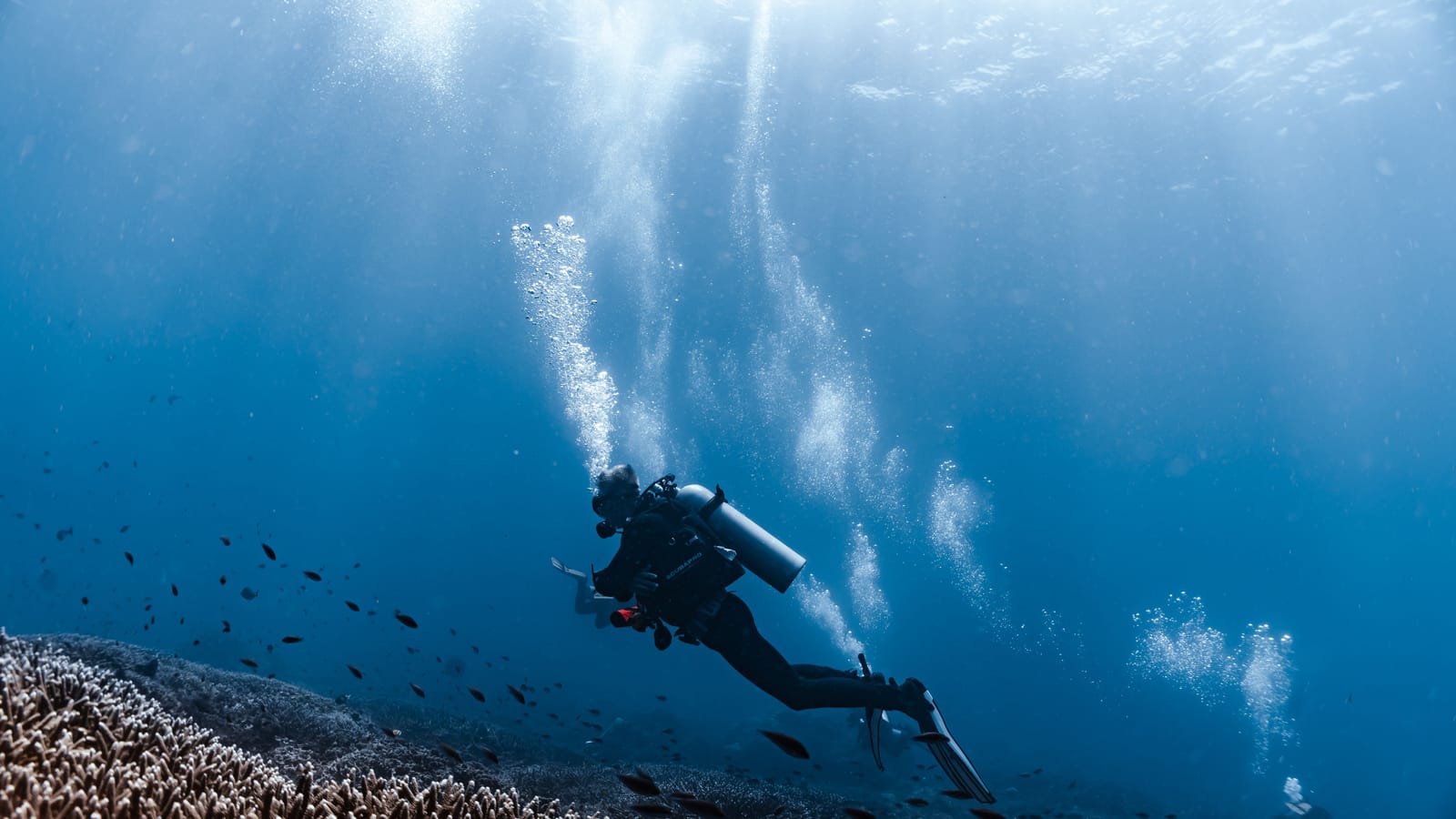
Divemaster training in Nusa Penida means training in current. You learn to brief, lead and assist divers on boat dives, in drift, in cold upwellings and around manta rays, at a different site most days. The classroom and pool work is the same as anywhere. The water is what changes.
This article covers the water: the sites, the currents, the shape of a day and how the island compares with Amed. The prerequisites, packages, inclusions and price are on our page for the Divemaster course at Legend Diving Penida.
Which Dive Sites Do You Train On in Nusa Penida?
You train on the sites we visit every day. In the first phase of the programme you join the daily trips and get to know them. By the last phase you are expected to brief them and supervise divers on them.
| Sites | Conditions | What you practise there |
|---|---|---|
| North coast: SD, Ped, Sental, Buyuk | Drift dives along a sloping reef, minutes from our dive centre | Drift briefings, keeping a group together, pick-ups by boat |
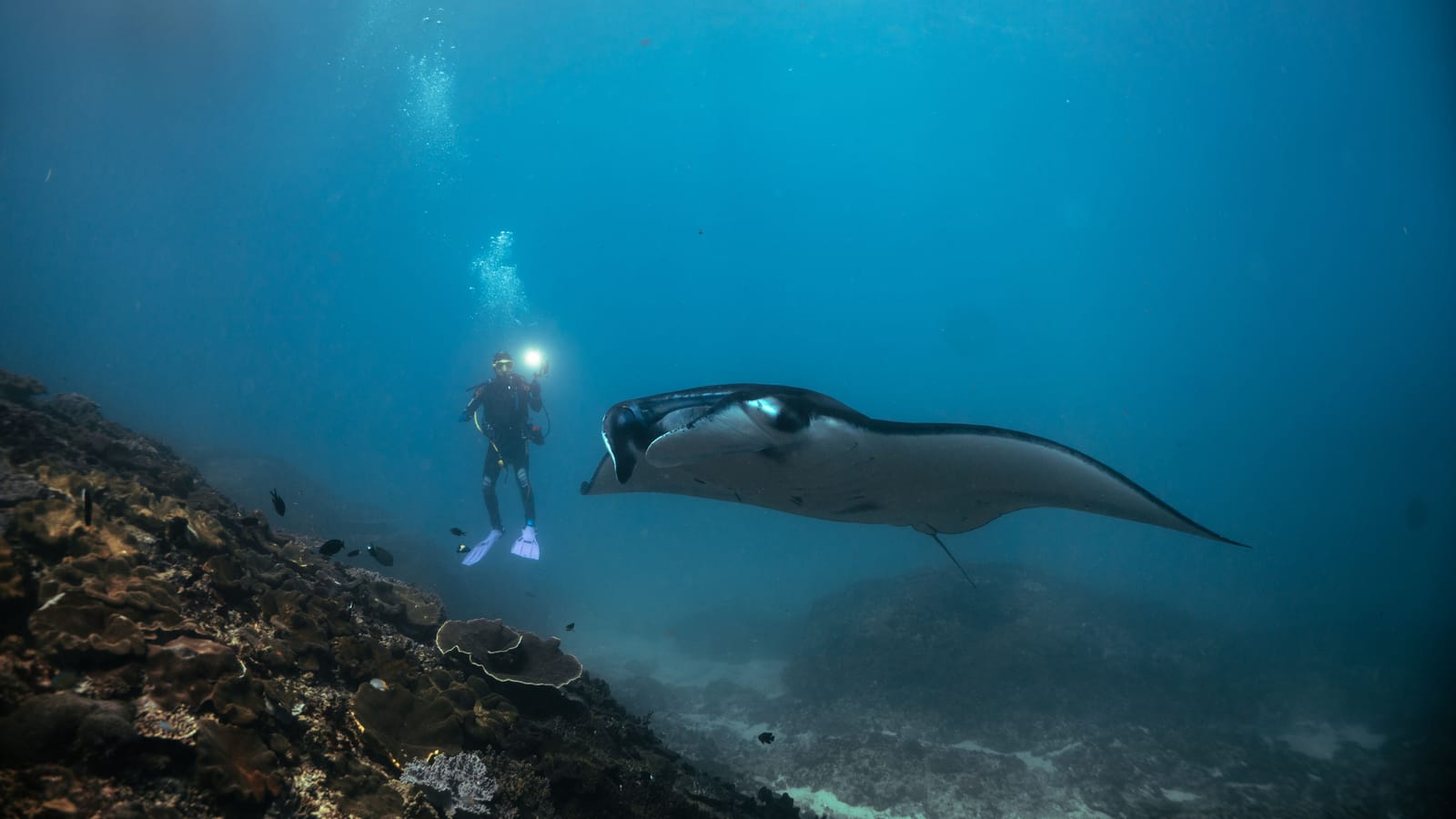
| Manta Point | The farthest site, about 30 minutes by boat. Surge, cooler water, a back-roll entry | Managing guests around the manta cleaning stations |
| Crystal Bay | A sheltered bay beside a deep, cold drop-off with strong current | Depth control, site choice by level, work with beginners in the bay |
| East coast: Karang Sari, Batu Nunggul | Milder at Karang Sari, moderate to fast current at Batu Nunggul | Reading how one coast changes from site to site |
| Our on-site pool | Still water | The 24-skill circuit with your mentor |
The third column is this article's summary of what each site demands. Rescue scenarios are also practised in open water, in lifelike situations.
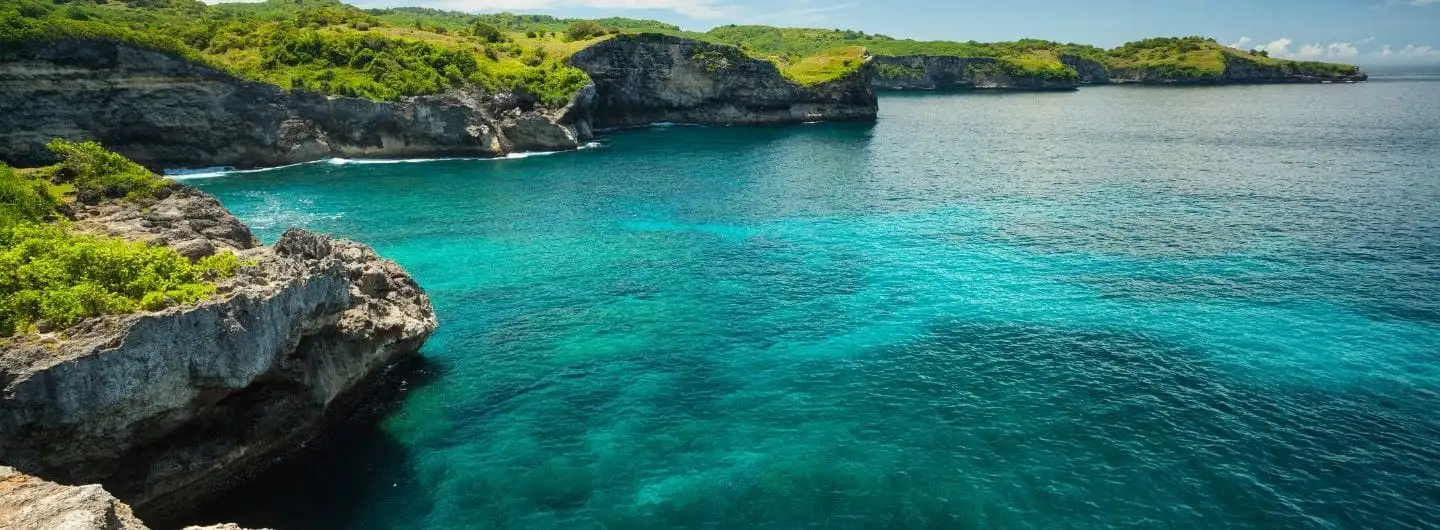
Manta Point, Crystal Bay, Karang Sari and Batu Nunggul each have a section, and the four north coast sites share one, on our page for dive sites in Nusa Penida.
Which Currents Do You Learn to Handle?
Our Divemaster candidates leave with a solid understanding of currents. Strong current and seasonal cold water are two things they learn to master. These are the conditions behind that statement.
| Condition | Where you meet it | What the procedure is |
|---|---|---|
| Drift | The north and east coasts | The boat drops the group at one point and collects it at another. Our team carries a surface marker buoy, because other boats are overhead |
| Down current | Steep drop-offs, when the current is strong | Watch the bubbles, swim horizontally out of it, add a little air to slow the descent, then release it |
| Up current | The same places | Release air, keep breathing, swim horizontally |
| Surge | Manta Point, on the south coast | Hold your depth and stay clear of the reef |
| Cold water | Manta Point and Crystal Bay, mostly from June to October | A 5 mm wetsuit at least, and a closer watch on air |
| Separation | Anywhere in current | Look for one minute, ascend slowly and meet at the surface |
Currents around the islands can pass 4 knots, and they can change during a dive. As a guest you follow these procedures. As a Divemaster candidate you learn to brief them and to notice when a guest is not following them.
What Does a Training Day Look Like?
A boat day runs from about 7:00 am to 2:00 pm. Our course page gives the full timetable. This is what each part asks of you in these conditions.
| Part of the day | What you do |
|---|---|
| Before the guests arrive | Check each guest's equipment and load the boat with tanks, food and oxygen. Your mentor gives you your tasks |
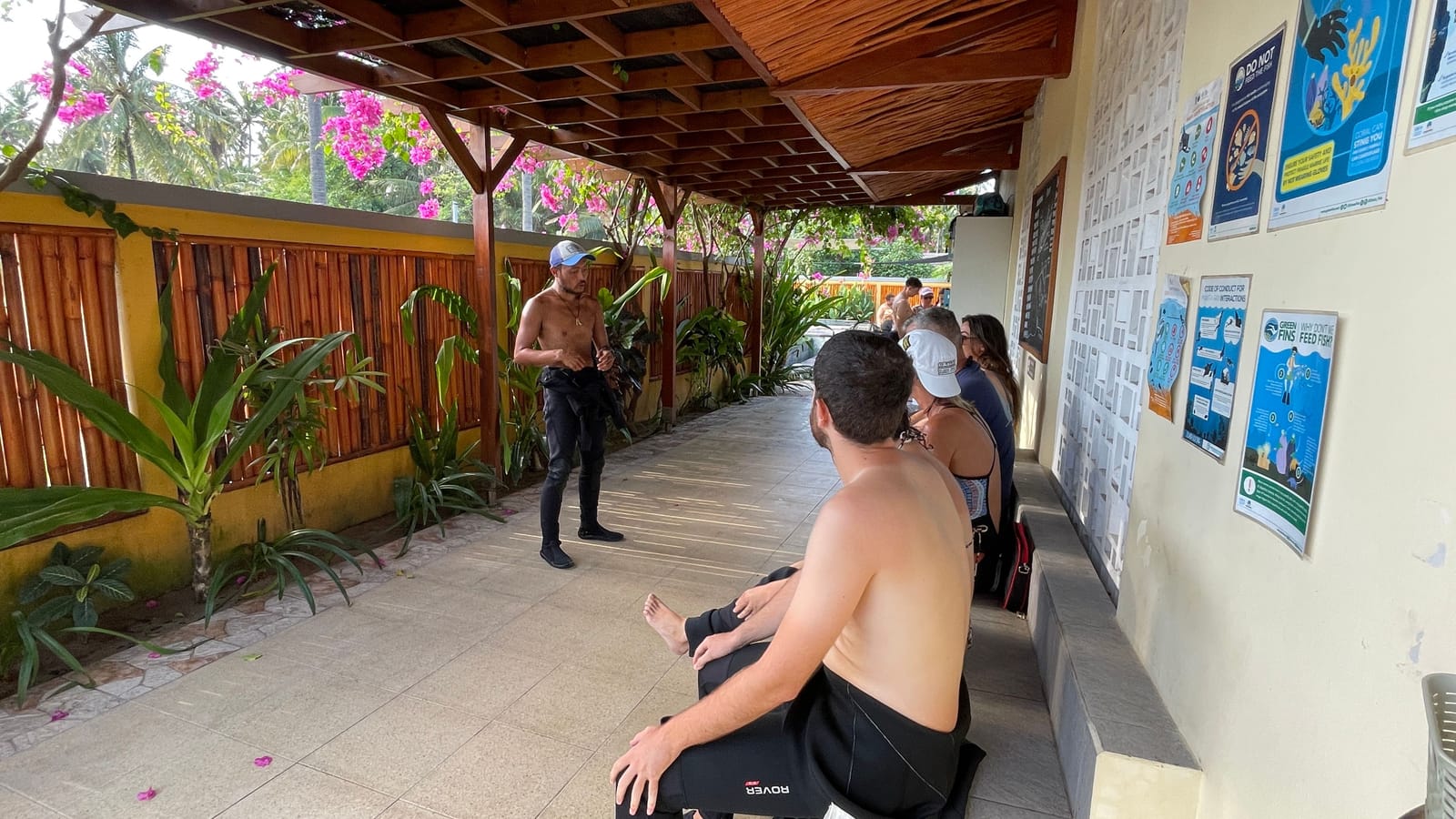
| When the guests arrive | Help with wetsuit sizing, which matters in cold water. Later in the programme, give the briefing on the day's plan |
| On the boat | Up to 30 minutes to the first site |
| First dive | Enter by back roll and assist the guide. Manta Point is the usual example |
| Surface interval | About an hour. Serve the food and change the tanks |
| Second dive | Often Crystal Bay, 20 minutes away |
| Back at our dive centre | Unload, wash the equipment and help guests with their logbooks |
| Afternoon | Free, or theory and pool sessions |
Not every day is a boat day. Theory is taught in air-conditioned classrooms and the skill circuit in the pool. We aim to give each candidate at least one day off a week.
Why Is Divemaster Training in Nusa Penida Harder Than in Amed?
Because the water moves more. Amed, on Bali's north-east coast, is known for shore diving over black sand. Nusa Penida is boat diving in current.
| Amed | Nusa Penida | |
|---|---|---|
| Entry | Most sites are reached from the shore | By boat, with a back roll into open water |
| Current | Varied. PADI's guide lists walls, coral gardens and some drift sites | Drift is normal on the north coast. Current can pass 4 knots, with down currents at drop-offs |
| Water temperature | PADI suggests 3 mm in the warm months and 5 to 7 mm when the water cools | As low as 16°C in the dry season |
| Sites | Sites between 6 and 22 m along one 14 km stretch of coast | Sites on several coasts, 10 to 30 minutes away by boat |
| At the surface | The beach | Boat traffic, pick-ups and surge on the south coast |
Harder is not better for everyone.
- Choose Amed if you want calm entries and the chance to repeat the same sites while you build skills.
- Choose Nusa Penida if you want to lead in current, work from boats and guide around manta rays and mola mola.
Both end in the same PADI Divemaster certification.
Frequently Asked Questions
Is Nusa Penida too difficult for Divemaster training?
No, because the difficulty is introduced in steps. You begin by joining the daily trips and assisting. Skills are learned in the pool first. Sites are chosen by level, as they are for guests.
Do you see manta rays and mola mola during Divemaster training?
Manta rays, almost daily. Mola mola are an occasional sighting, with the main season from mid-July to mid-October.
Do you train in a pool or in the ocean?
Both. Most of the water-skills work, including the 24-skill circuit, is done in our on-site pool. Rescue scenarios and all guiding practice take place in open water.
How cold is the water during Divemaster training in Nusa Penida?
It depends on the season. In the dry season, from April to October, it can drop to 16°C. In the rainy season it is 26 to 28°C.
Do you need drift diving experience before you start?
Our course page does not list it as a requirement. You build it during the programme, which includes unlimited fun diving. The PADI Drift Diver specialty can be added to a Divemaster package at a discount.
Can you do Divemaster training in Nusa Penida in the rainy season?
Yes. The course runs all year. The rainy season, from November to March, brings warmer water. Visibility can change from day to day after the first rains in December and January.
Conclusion
Divemaster training in Nusa Penida teaches the standard PADI programme in demanding water: drift on the north coast, surge at Manta Point, cold and depth at Crystal Bay. You finish able to brief and lead in those conditions.
If you want calm water to learn in, look at Amed. If you want current, boats, and big animals in your logbook, train here.