 简体中文
 Français
 Español
 Deutsch

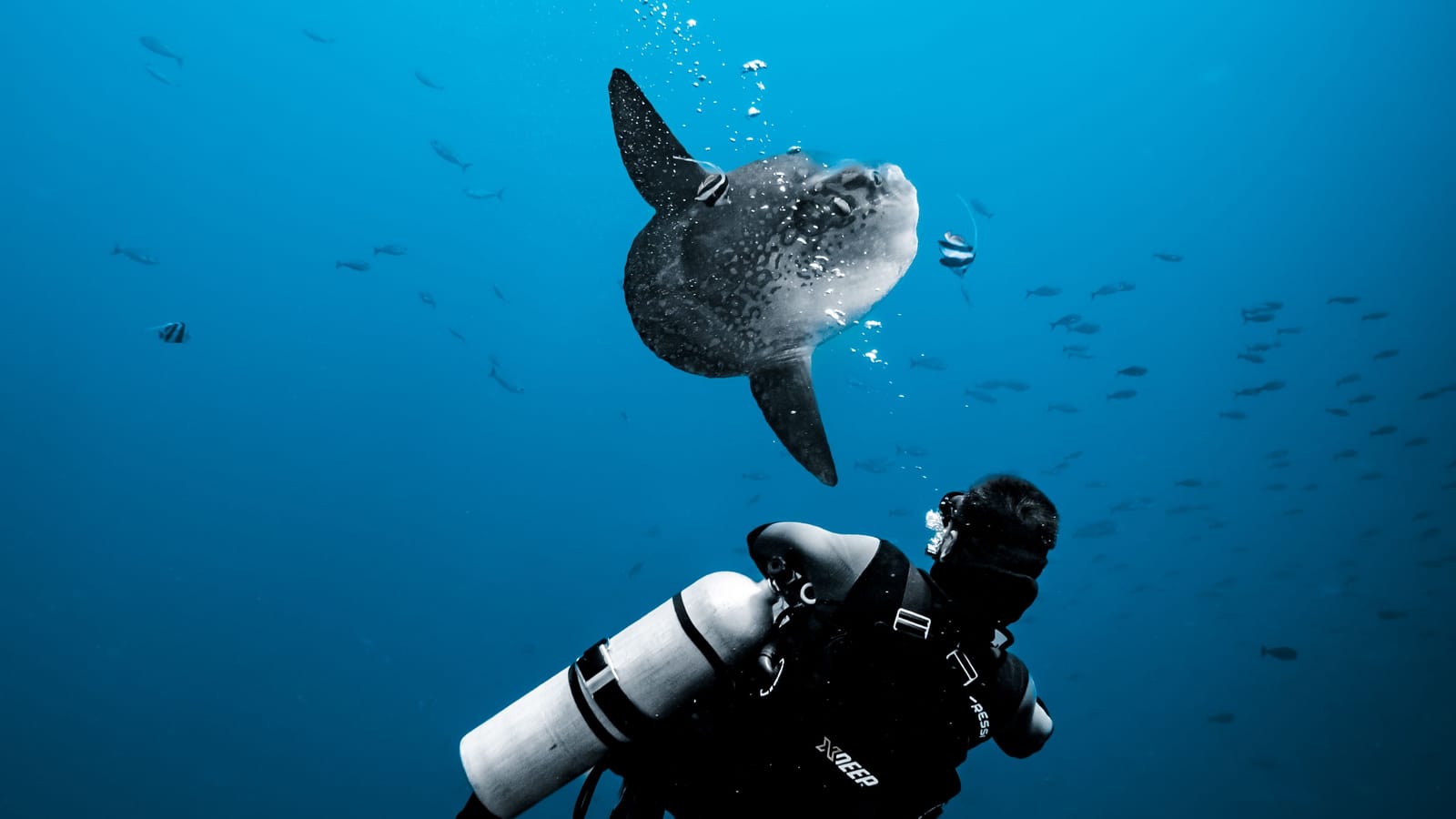
Mola mola season in Nusa Penida runs from mid-July to mid-October. August is the surest month, with July and September close behind. Early sightings start in June and late ones continue to the end of October, and an occasional mola is seen in any month of the year.
The season follows the water. From about June to October, cold water wells up along the south coast, and the sunfish come onto the reefs at depths that divers can reach. The fish that divers here call mola mola is the giant sunfish, Mola alexandrini.
Mola Mola Season in Nusa Penida, Month by Month
| Month | What to expect |
|---|---|
| June | The water starts to cool. Early sightings are possible from about the middle of the month |
| July | The season opens and is established by mid-month |
| August | The surest month |
| September | Peak conditions continue |
| October | In season for the first half, then tapering to the end of the month |
| November to May | Warmer water, 26 to 28°C in the rainy season. Sightings are occasional |
July, August and September also bring the coldest water of the year, which is the link between the two.
The calendar follows our own season notes at Legend Diving Penida and agrees with published research, which reports sunfish most commonly sighted from July through October. The start is not fixed. Researchers describe the season as beginning in July or August and lasting well into October.
Why Does Mola Season Fall Between July and October?
The south-east monsoon drives a strong seasonal upwelling around Nusa Penida from about June to October. Cold, deep water rises along the south coast. The Bali Ocean Sunfish Research Project reports 16 to 17°C there in mola season, with dips to 13 or 14°C, while the north coast stays at about 24 to 28°C.
Sightings follow that cold water. A tagging study found that these sunfish spend 95% of their time in the top 250 m and dive to more than 400 m. In the cold months they come onto the reef, within reach of divers, to be cleaned by reef fish. Whether they also come to feed or to spawn is not known.
Two caveats come with any mola calendar. Sunfish are reported in every month, and one tagged sunfish was still within 10 km of the island six months after tagging. More divers are also in the water from July to October, which makes the season look sharper than it may be.
The biology behind this, from cleaning stations to how the fish copes with cold water, is on our page about mola mola in Nusa Penida.
What Decides Your Chances on a Given Dive?
Being there in season is the first condition. Four more decide whether you meet a mola.
- Depth. Most encounters happen between 20 and 40 m. An Open Water Diver is limited to 18 m, so most of that zone is out of reach without an Advanced Open Water certification, which takes you to 30 m.
- Cold water. Guides look for the thermocline, the boundary where warm water meets cold, because that is where molas appear. Expect the temperature to drop sharply when you cross it.
- The moon. The tagging study reports that sunfish are most commonly sighted during spring tides, the days around full moon and new moon.
- Time in the water. No one can promise a mola on a single dive. Several dive days in season give you several chances.
How Do You Plan a Trip Around Mola Season?
- Pick your dates. Book between mid-July and mid-October. If you are free to choose, take August, and aim for the days around a full or new moon.
- Get certified to 30 m. Finish Advanced Open Water before you arrive, or take it on the island, where it runs over two days. We also recommend the Deep specialty for mola dives.
- Dress for cold water. Wear a 5 mm wetsuit and a hood. Water on the south coast can fall to 16°C.
- Book several dive days. Give yourself more than one morning. Crystal Bay is the best-known mola site, and it is busy in high season, with strong current.
- Read up before you dive. The ultimate guide for molas of Nusa Penida covers the best site, the code of conduct and how your photos can help identify individual fish.
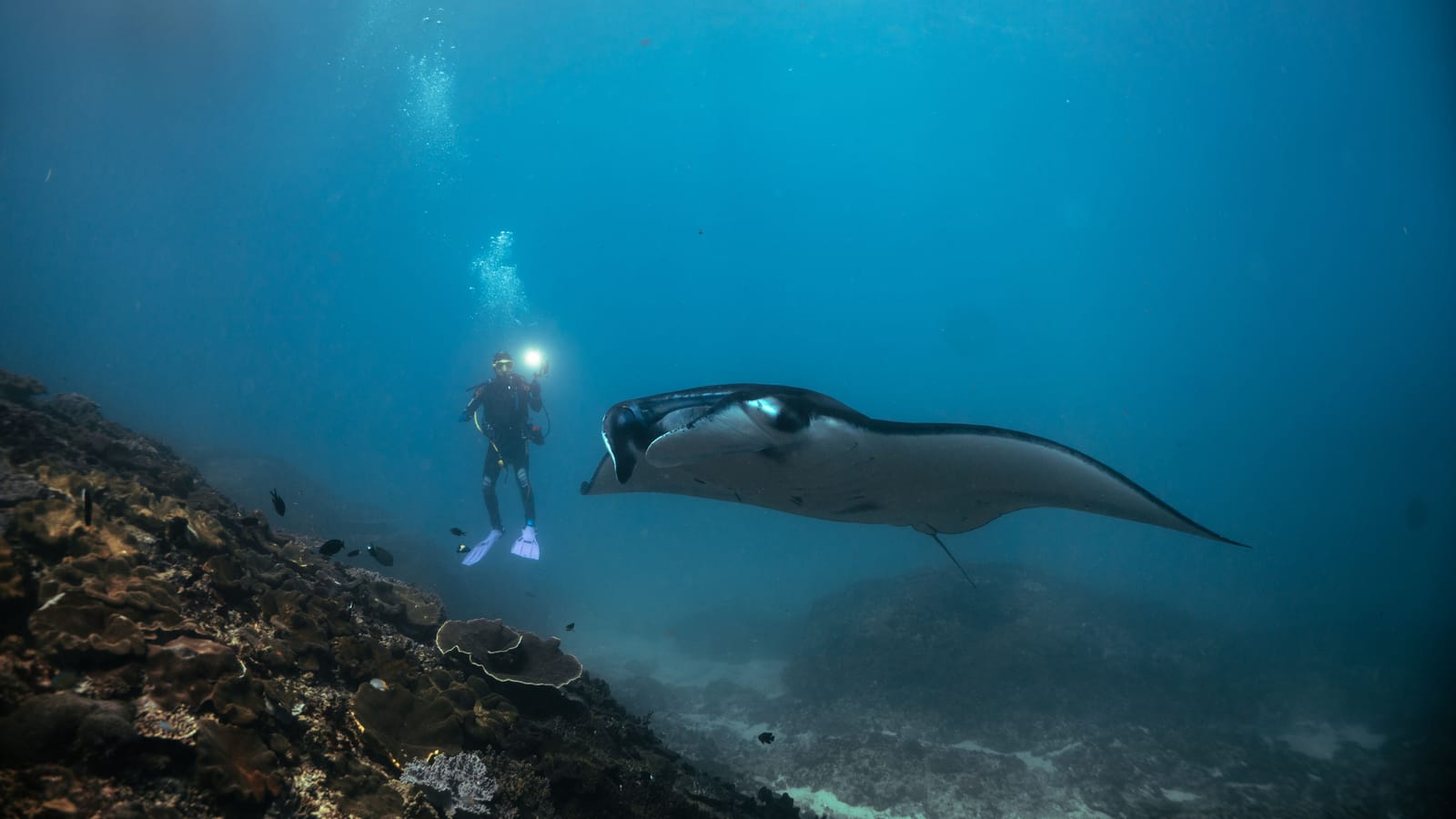
If your dates fall outside the season, come for the manta rays. They are in Nusa Penida all year.
Frequently Asked Questions
What is the best month to see mola mola in Nusa Penida?
August. It sits in the middle of the season, when the water is coldest. July and September are close behind.
Can you see mola mola in Nusa Penida in June or late October?
Sometimes. These are the edges of the season. Sightings begin as the water cools in June and thin out toward the end of October. Do not plan a trip around them.
Can you see mola mola outside the season?
Occasionally. Sunfish are reported around Nusa Penida in every month, and one tagged sunfish was still within 10 km of the island six months after tagging. From November to May the water is warm, so treat a mola as a bonus.
How cold is the water during mola season?
On the south coast it is typically 16 to 17°C in season and can dip lower. The north coast stays at about 24 to 28°C, so the temperature changes a great deal between sites and between depths on the same dive.
Do you need to be an advanced diver to see mola mola?
In practice, yes. Most encounters are between 20 and 40 m. Open Water Divers are limited to 18 m and Advanced Open Water divers to 30 m.
Does the moon affect mola mola sightings?
Research suggests it does. Sunfish in Nusa Penida are most commonly sighted during spring tides, which fall around full moon and new moon.
Conclusion
Plan for mid-July to mid-October, favour August and choose dates near a full or new moon. Arrive certified to 30 m, dressed for 16°C water and with several dive days in hand.
The season is a pattern in cold water. It shifts a little every year, and the molas keep their own schedule.